
Create your Landlord-Tenant Dispute Document from scratch

Start Building Now
Title decoration

Here's how it works

01. Start with a blank Landlord-Tenant Dispute Document
Open the blank document in the editor, set the document view, and add extra pages if applicable.
02. Add and configure fillable fields
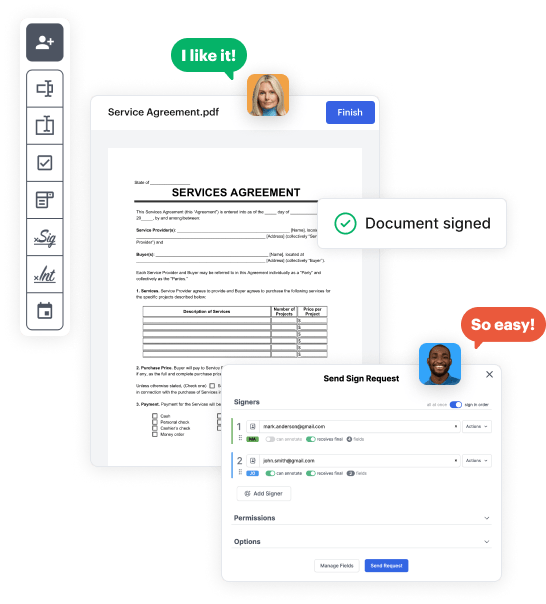
Use the top toolbar to insert fields like text and signature boxes, radio buttons, checkboxes, and more. Assign users to fields.
03. Distribute your form
Share your Landlord-Tenant Dispute Document in seconds via email or a link. You can also download it, export it, or print it out.

Create Landlord-Tenant Dispute Document from the ground up by following these detailed guidelines

Form edit decoration

Step 1: Get started with DocHub.

Begin by registering a free DocHub account using any offered sign-up method. Simply log in if you already have one.

Step 2: Register for a free 30-day trial.

Try out the complete set of DocHub's advanced tools by registering for a free 30-day trial of the Pro plan and proceed to build your Landlord-Tenant Dispute Document.

Step 3: Create a new empty doc.

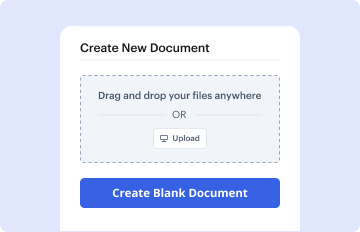
In your dashboard, click the New Document button > scroll down and hit Create Blank Document. You will be taken to the editor.

Step 4: Organize the document’s layout.

Use the Page Controls icon marked by the arrow to toggle between two page views and layouts for more flexibility.

Step 5: Begin by inserting fields to design the dynamic Landlord-Tenant Dispute Document.

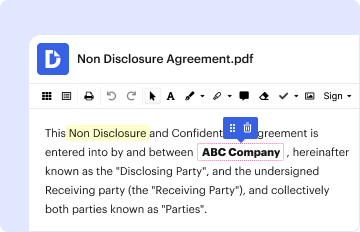
Explore the top toolbar to place document fields. Add and arrange text boxes, the signature block (if applicable), add photos, and other elements.

Step 6: Prepare and customize the incorporated fields.

Arrange the fields you incorporated based on your desired layout. Modify the size, font, and alignment to ensure the form is easy to use and professional.

Step 7: Finalize and share your template.

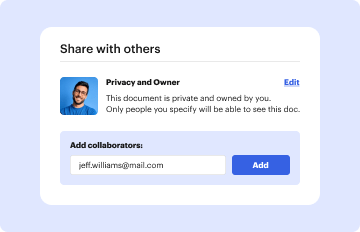
Save the ready-to-go copy in DocHub or in platforms like Google Drive or Dropbox, or create a new Landlord-Tenant Dispute Document. Send out your form via email or use a public link to engage with more people.


be ready to get more

Build your Landlord-Tenant Dispute Document in minutes

Start creating now

Got questions?

We have answers to the most popular questions from our customers. If you can't find an answer to your question, please contact us.
Contact us
Some Ways to Resolve Conflicts Talk directly. Assuming that there is no threat of physical violence, talk directly to the person with whom you have the problem. Choose a good time. Plan ahead. Dont blame or name-call. Give information. Listen. Show that you are listening. Talk it all through.
How to write a formal complaint letter Lots of detail about the problem(s), including dates, times and the names of people involved. Evidence (pictures, text message screenshots, etc.) How the problem is affecting you. Steps necessary to resolve the problem. A reasonable deadline to resolve the problem.
Conflicts can be resolved in a variety of ways, including negotiation, mediation, arbitration, and litigation. Negotiation. In conflict resolution, you can and should draw on the same principles of collaborative negotiation that you use in dealmaking.
Mediating tenant conflict when it does arise Listen to the complaint and try to show genuine concern. Contact the offending party and inform them of the complaint. If the offending party has a defense, hear them out. Should a meeting be necessary, let both parties air their grievances. Document your meetings.
Below, we have included some general steps to follow to write an effective complaint letter to your landlord. Explain Your Complaint. Explain the Impact. Suggest a Solution. Attach Any Relevant Documentation. Include a Deadline to Respond. File a Complaint Against Your Landlord. Send a Demand Letter to Your Landlord.
be ready to get more

Build your Landlord-Tenant Dispute Document in minutes

Start creating now

Related Q&A to Landlord-Tenant Dispute Document

8 Ways to Resolve Resident Disputes Set Clear Expectations in the Lease. Dont Take a Hands-Off Approach. Listen, Listen, Listen. Propose Mediation. Always Be Professional and Objective. Keep a Paper Trail. Follow Up With Both Parties More Than Once. Understand When Youve docHubed an Impasse.
Understand their problem, always listen, never interrupt, and then offer an action plan to fix the problem. If theyre aggressive and youre unable to resolve the issue nor calm them down, simply tell them you will call them back so you can investigate and resolve the problem.
This can include disagreements over rent amount, length of tenancy, damage to the property, or any other issue specified in the contract. Sometimes, a dispute may arise due to a misunderstanding or miscommunication between the parties.

Additional resources on building your forms


