Enhance your template administration with US Legal Discovery Documents

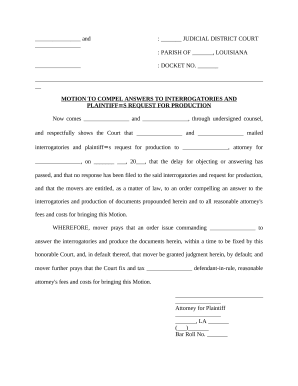
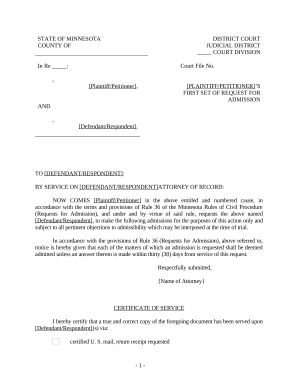
Your workflows always benefit when you can locate all of the forms and files you will need at your fingertips. DocHub delivers a a huge collection of documents to relieve your daily pains. Get a hold of US Legal Discovery Documents category and easily discover your form.

Start working with US Legal Discovery Documents in a few clicks:

  1. Browse US Legal Discovery Documents and get the form you need.
  2. Click Get Form to open it in the editor.
  3. Begin changing your file: add more fillable fields, highlight paragraphs, or blackout sensitive information and facts.
  4. The app saves your modifications automatically, and after you are ready, you can download or share your form with other contributors.

Enjoy fast and easy file managing with DocHub. Explore our US Legal Discovery Documents collection and get your form today!


Video Guide on US Legal Discovery Documents management

video background

Commonly Asked Questions about US Legal Discovery Documents

Once a party properly conducts general discovery in ance with discovery rules and procedures, documents are deemed discoverable, i.e. documents are available for inspection.
Depositions are probably the most powerful discovery tool. Depositions, however, can be extremely expensive and are not always necessary or appropriate.
In the United States, there are five basic forms of discovery: depositions, interrogatories, requests for production of documents (or permission to inspect), physical and mental examinations, and requests for admission.
Steps in a Trial It s designed to prevent trial by ambush, where one side doesn t learn of the other side s evidence or witnesses until the trial, when there s no time to obtain answering evidence. One of the most common methods of discovery is to take depositions.
Under most rules of civil procedure, discovery tools include: Depositions on oral or written questions. Written interrogatories. Production of tangible items. Physical and mental examinations. Requests for admission of evidence.
There are four main types of discovery requests: (1) depositions; (2) interrogatories; (3) requests for admissions; and (4) requests for the production of documents. Depositions are formal witness interviews.
Disclosure is accomplished through a methodical process called discovery. Discovery takes three basic forms: written discovery, document production, and depositions.
Prosecutors must also provide the defendant copies of materials and evidence that the prosecution intends to use at trial. This process is called discovery, and continues from the time the case begins to the time of trial.