
US Government Legal Forms

Get and manage US Government Legal Forms online
Accelerate your document managing using our US Government Legal Forms collection with ready-made form templates that suit your requirements. Access your form template, change it, fill it, and share it with your contributors without breaking a sweat. Begin working more efficiently together with your forms.
The best way to use our US Government Legal Forms:
- Open our US Government Legal Forms and find the form you need.
- Preview your form to ensure it’s what you want, and click Get Form to start working on it.
- Edit, add new text, or point out important information with DocHub features.
- Fill out your form and save the changes.
- Download or share your form with other people.
Examine all of the possibilities for your online file management using our US Government Legal Forms. Get your totally free DocHub account today!
Commonly Asked Questions about US Government Legal Forms
How many U.S. court districts are there?
There are 89 districts in the 50 states, which are listed with their divisions in Title 28 of the U.S. Code, Sections 81-144. District courts also exist in Puerto Rico, the Virgin Islands, the District of Columbia, Guam, and the Northern Mariana Islands. In total there are 94 U.S. district courts.
Are there more than 51 different court systems in the United States?
Separate Federal and State Court Systems Thus, there are at least 51 legal systems: fifty were created under state laws, and the federal system was created under federal law. Additionally, there are court systems in the U.S. Territories, and the military has a separate court system as well.
What type of U.S. courts are there?
There are 3 levels of federal courts: The U.S. district courts (the trial courts), The U.S. courts of appeals (the appellate courts), and. The U.S. Supreme Court.
How many US courts are there?
In the federal court systems present form, 94 district level trial courts and 13 courts of appeals sit below the Supreme Court. Learn more about the Supreme Court.
How many courts are there in the United States?
There are 94 district courts, 13 circuit courts, and one Supreme Court throughout the country. Courts in the federal system work differently in many ways than state courts. The primary difference for civil cases (as opposed to criminal cases) is the types of cases that can be heard in the federal system.
Related Templates

Cal South ODP Camps Player Medical Release and Questionnaire
The document is a medical release and questionnaire form for players attending Cal South ODP Camps. It collects personal ...

Va form 10017 fillable
The VHA Handbook 1100.17 outlines the procedures for Veterans Health Administration facilities regarding the reporting o ...

Form 27 hpcsa
The document is an application form for the Health Professions Council of South Africa (HPCSA) regarding the completion ...

Job shadowing report template
The document is a JOB/CAREER SHADOWING REPORT template designed for students to record their experiences while shadowing ...
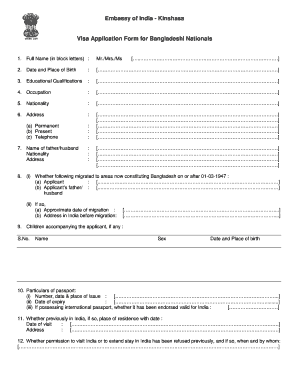
Bangladesh visa for pakistan
The document consists of visa application forms for Bangladeshi, Pakistani, and Sri Lankan nationals seeking to visit In ...

Aviano Air Base Driver s Study Guide
The document is a comprehensive Driver's Study Guide for personnel at Aviano Air Base, Italy, detailing the requirements ...
Instructions for TRACS 202D form HUD-50059 A Owner's
The document provides detailed instructions for completing the HUD-50059 A form, which is used for reporting tenant move ...