Get and manage US Criminal Law Motions online

Boost your document managing using our US Criminal Law Motions online library with ready-made form templates that suit your requirements. Access the document, modify it, fill it, and share it with your contributors without breaking a sweat. Start working more efficiently with your documents.

How to use our US Criminal Law Motions:

  1. Open our US Criminal Law Motions and search for the form you require.
  2. Preview your form to ensure it’s what you want, and click on Get Form to start working on it.
  3. Change, add new text, or point out important information with DocHub features.
  4. Prepare your form and preserve the modifications.
  5. Download or share your form template with other people.

Explore all of the opportunities for your online document management using our US Criminal Law Motions. Get a totally free DocHub profile today!


Video Guide on US Criminal Law Motions management

video background

Commonly Asked Questions about US Criminal Law Motions

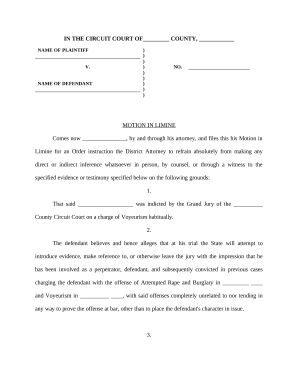
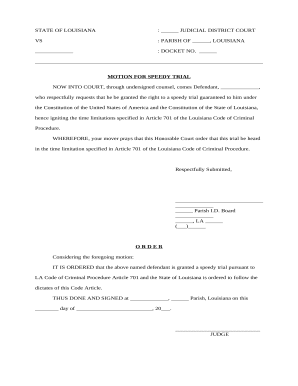
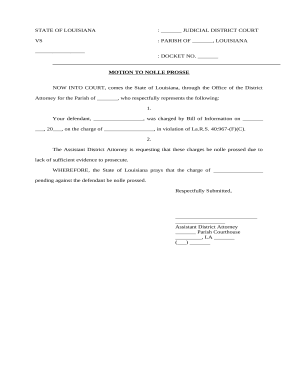
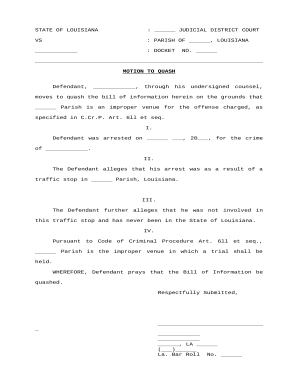
A motion is an application to the court made by the prosecutor or defense attorney, requesting that the court make a decision on a certain issue before the trial begins. The motion can affect the trial, courtroom, defendants, evidence, or testimony. Only judges decide the outcome of motions.
A motion is filed to get a court ruling on an issue. Examples are a Motion for Summary Judgment, Motion for Judgment of Acquittal, or Motion to Dismissal. A Request is less common, but is filed when the party has failed to Answer the Complaint and a party files a Request for Order of Default.
An Order is a separate document that a judge signs which sets forth the judges ruling on a motion.
A motion is a written request made to the court, asking the judge to issue an order. The motion must be supported by evidence.
Is a motion the same as a hearing? No, a motion is a formal request to the court, while a hearing is the proceeding where the court considers and decides on that request.
A motion to recuse is a legal motion filed in court that says a judge should be disqualified, or removed, from a legal case for a reason listed within CCP 170.1. The motion can be brought by either a prosecutor or a defense attorney.
Rule 33 of the Federal Rules of Criminal Procedure permits a federal court to grant a new trial to a criminal defendant if the interest of justice so requires, specifying as one potential basis the availability of newly discovered evidence. The federal circuit courts have disagreed as to whether postconviction
Primary tabs. Latin for of ones own - sua sponte is used to indicate that a court has taken notice of an issue on its own motion, without prompting or suggestion from either party. As a general rule, where grounds for dismissal exist, an action is subject to dismissal on a courts own motion.
A motion is the method used to speak to the judge about a matter in your case. For example, a motion may be brought to ask the court to set aside a default or vacate a default judgment, or it may be brought to ask the court to order a judgment to be paid in installments.
Among the most common pre-trial motions include: Motion to Suppress: This motion attempts to restrict certain statements and evidence from being introduced as evidence at trial. Motion to Discover. Motion to Dismiss: An attempt to get the judge to dismiss a charge or case altogether.