

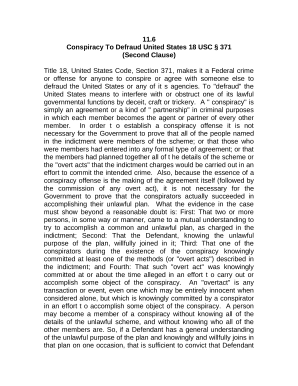
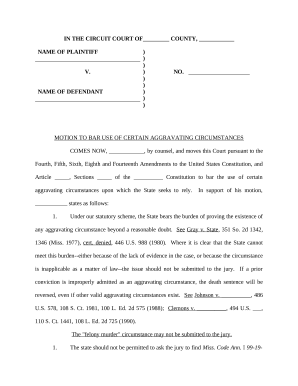
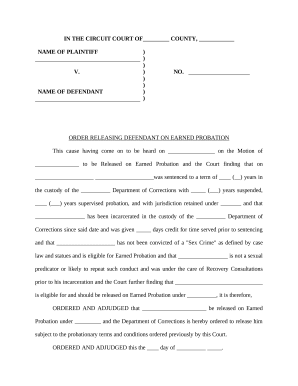
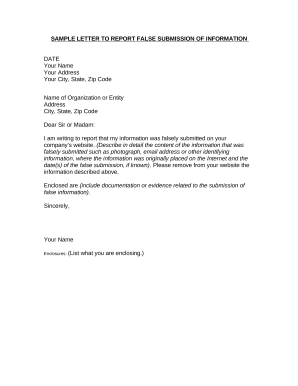
Improve your template administration with US Criminal Law Documents

Your workflows always benefit when you can easily locate all the forms and documents you will need on hand. DocHub offers a huge selection of documents to alleviate your day-to-day pains. Get hold of US Criminal Law Documents category and quickly find your document.

Begin working with US Criminal Law Documents in several clicks:

  1. Access US Criminal Law Documents and get the form you require.
  2. Click on Get Form to open it in our editor.
  3. Begin modifying your form: add more fillable fields, highlight sentences, or blackout sensitive facts.
  4. The app saves your changes automatically, and after you are ready, you can download or share your form with other contributors.

Enjoy smooth document management with DocHub. Explore our US Criminal Law Documents collection and discover your form right now!


Video Guide on US Criminal Law Documents management

video background

Commonly Asked Questions about US Criminal Law Documents

Federal case files are maintained electronically and are available through the internet-based Public Access to Court Electronic Records (PACER) service. PACER allows anyone with an account to search and locate appellate, district, and bankruptcy court case and docket information. Register for a PACER account.
Sources of Criminal Law: Statutes, Ordinances, and Other Legislative Enactments. The most substantive criminal law is legislative law. State legislatures and Congress enact laws that take the form of statutes or congressional acts.
The standard of proof in a criminal trial gives the prosecutor a much greater burden than the plaintiff in a civil trial. The defendant must be found guilty beyond a reasonable doubt, which means the evidence must be so strong that there is no reasonable doubt that the defendant committed the crime.
These four sources of law are the United States Constitution, federal and state statutes, administrative regulations, and case law. Each countrys legal system has its own sources of law, but for those systems that enact Constitutions, the Constitutions are the most fundamental of the sources of law.
The three sources of law are constitutional, statutory, and case law. The sources of law are ranked as follows: first, constitutional; second, statutory; and third, case law. Although it is technically ranked the lowest, judicial review makes case law an extremely powerful source of law.
The primary sources of law in the United States are the United States Constitution, state constitutions, federal and state statutes, common law, case law, and administrative law.
Use the PACER Case Locator to search a nationwide index of federal court cases. This information is updated daily.
