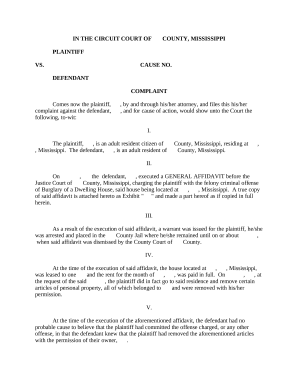
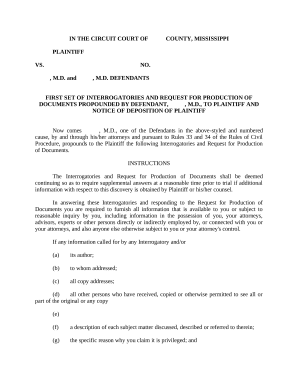
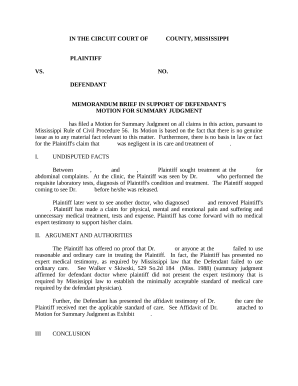
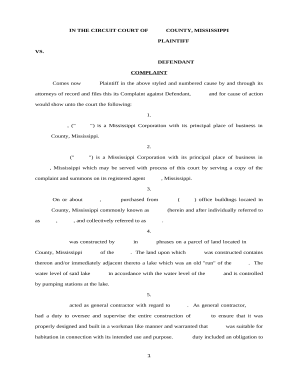
Enhance your document administration with US Civil Actions Forms

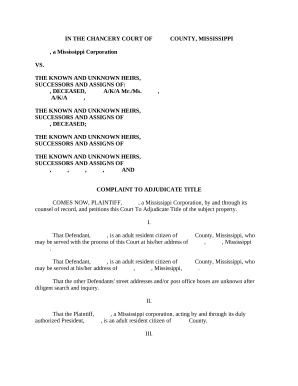
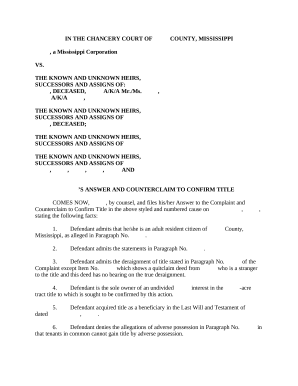
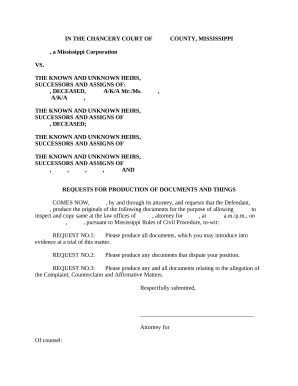
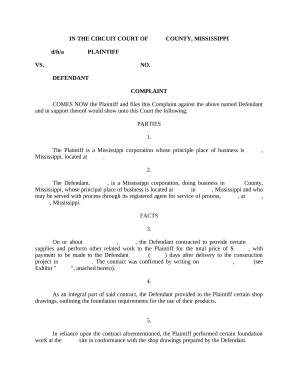
Your workflows always benefit when you can discover all of the forms and files you need at your fingertips. DocHub offers a vast array of documents to ease your daily pains. Get hold of US Civil Actions Forms category and easily discover your document.

Start working with US Civil Actions Forms in a few clicks:

  1. Browse US Civil Actions Forms and locate the form you need.
  2. Click on Get Form to open it in our online editor.
  3. Start adjusting your form: add more fillable fields, highlight sentences, or blackout sensitive facts.
  4. The app saves your changes automatically, and after you are all set, you can download or share your file with other contributors.

Enjoy effortless document management with DocHub. Discover our US Civil Actions Forms collection and find your form today!


Video Guide on US Civil Actions Forms management

video background

Commonly Asked Questions about US Civil Actions Forms

The civil standard of proof is proof on a balance of probabilities. The criminal standard is proof beyond a reasonable doubt.
Civil cases are divided into two main categories generally by how much money they involve. The procedures are a little different between the two main types: Unlimited civil cases are cases for over $35,000. Limited civil cases are cases for $35,000 or less.
Beyond a Reasonable Doubt This is the standard the U.S. Constitution requires the government to meet in order to prove a defendant guilty of a crime. (In re Winship, 397 U.S. 358, 364 (1970).) Courts over the years have debated the extent to which the government has to prove its case to meet this high standard.
Typical civil causes of action include bdocHub of contract, battery, or defamation and violations of federal statutes and constitutional rights. To establish a prima facie civil case, a plaintiff must describe his or her damages or injury, explain how the defendant caused the harm, and ask the court for relief.
In California, there are three main standards of evidence used: preponderance of the evidence, clear and convincing evidence, and beyond a reasonable doubt. The preponderance of the evidence is the lowest standard of proof in a civil case.
In 1970, the Court held in In re Winship that the due process clauses of the Fifth and Fourteenth Amendments [protect] the accused against conviction except upon proof beyond a reasonable doubt of every fact necessary to constitute the crime with which he is charged.
In civil cases, the plaintiff has the burden of proving their case by a preponderance of the evidence, which means the plaintiff merely needs to show that the fact in dispute is more likely than not.
Broadly speaking, civil procedure consists of the rules by which courts conduct civil trials. Civil trials concern the judicial resolution of claims by one individual or class against another and are to be distinguished from criminal trials, in which the state prosecutes an individual for violation of criminal law.