Manage Unlawful Eviction Letters effortlessly online

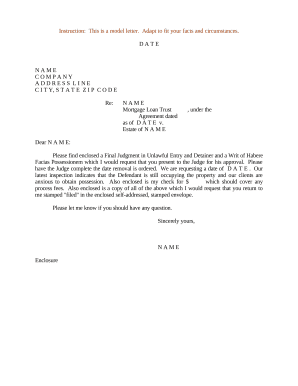
Document management can stress you when you can’t locate all the forms you need. Fortunately, with DocHub's vast form categories, you can get all you need and easily handle it without switching between software. Get our Unlawful Eviction Letters and start working with them.

Using our Unlawful Eviction Letters using these basic steps:

  1. Check Unlawful Eviction Letters and choose the form you need.
  2. Review the template and click on Get Form.
  3. Wait for it to upload in the online editor.
  4. Alter your form: add new information and pictures, and fillable fields or blackout certain parts if needed.
  5. Prepare your form, save adjustments, and prepare it for sending.
  6. When all set, download your form or share it with other contributors.

Try out DocHub and browse our Unlawful Eviction Letters category with ease. Get a free account right now!


Video Guide on Unlawful Eviction Letters management

video background

Commonly Asked Questions about Unlawful Eviction Letters

Your landlord cannot evict you verbally or through letters or notices. A notice to appear in court does not mean you have to leave your home. You have the right to heat, hot water, and electricity. It is illegal for someone to shut off your utilities to try to get you to leave or as a punishment.
Under the new Good Cause Eviction law, New Yorkers have the right to continue living in their homes without fear of unreasonable eviction or extreme rent increases. In many situations, tenants of market rate housing will now be covered by more expansive protections. Read below for details.
A self-help eviction is another term for an illegal eviction, or when a landlord takes their own measures to evict a tenant that are outside legal eviction procedures. The term comes from the idea of a landlord taking evictions into their own hands with no legal oversight.
evict an occupant from their home without a court order, or to fail to restore an occupant who. was evicted without court order. ( RPAPL 768) Unlawful evictions are now criminal matters and law enforcement should play an active role in enforcing the law.
In New York State, an eviction of a tenant is lawful only if an owner has brought a court proceeding and obtained a judgment of possession from the court. A sheriff, marshal or constable can carry out a court ordered eviction. An owner may not evict a tenant by use of force or unlawful means.
The clerk will send your papers, along with the court file to the judge who handled your case. You may have to wait in the clerks office or to go to the courtroom where your papers have been sent. The Judge may sign your order to show cause and stop the eviction until the case can be heard.
This law prohibits the actual or attempted eviction of anyone occupying a dwelling for longer than one month, or who has a lease, or who requested a lease by 1) threatening to hurt the person occupying the apartment, 2) impeding the tenants comfort, peace, and quiet, 3) or throwing the occupants possessions out of