
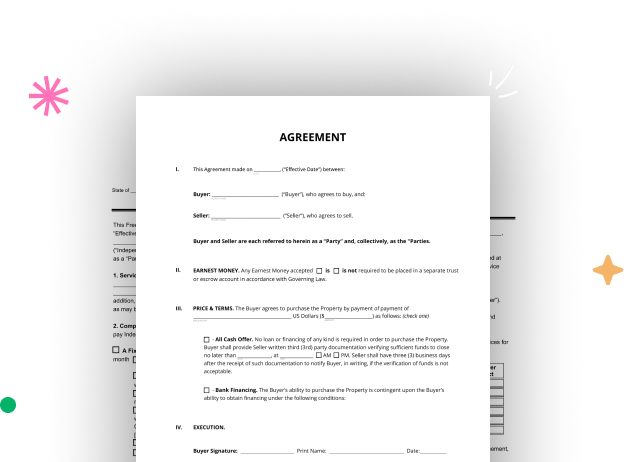

Create your United States Civil Law Form from scratch

Start Building Now
Title decoration

Here's how it works

01. Start with a blank United States Civil Law Form
Open the blank document in the editor, set the document view, and add extra pages if applicable.
02. Add and configure fillable fields
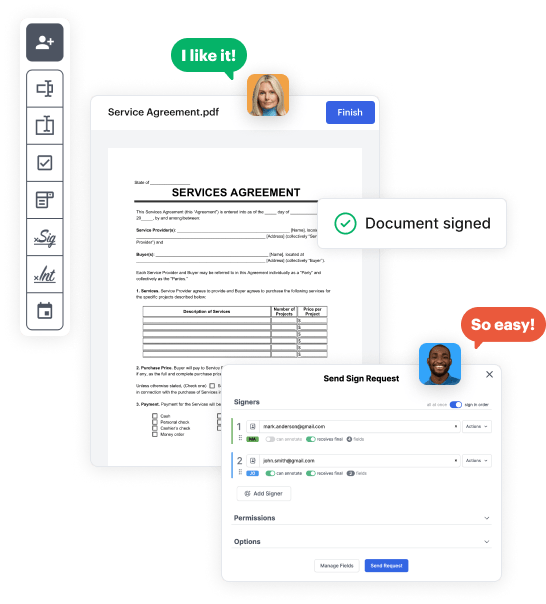
Use the top toolbar to insert fields like text and signature boxes, radio buttons, checkboxes, and more. Assign users to fields.
03. Distribute your form
Share your United States Civil Law Form in seconds via email or a link. You can also download it, export it, or print it out.

Build United States Civil Law Form from scratch by following these comprehensive guidelines

Form edit decoration

Step 1: Open DocHub and get going.

Start by setting up a free DocHub account using any available sign-up method. Simply log in if you already have one.

Step 2: Register for a free 30-day trial.

Try out the whole set of DocHub's advanced features by registering for a free 30-day trial of the Pro plan and proceed to build your United States Civil Law Form.

Step 3: Start with a new empty document.

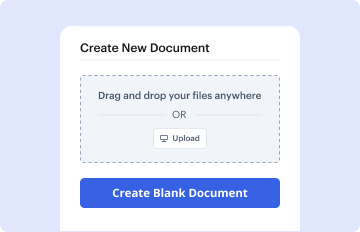
In your dashboard, select the New Document button > scroll down and hit Create Blank Document. You will be taken to the editor.

Step 4: Arrange the view of the document.

Utilize the Page Controls icon marked by the arrow to switch between different page views and layouts for more flexibility.

Step 5: Begin by adding fields to design the dynamic United States Civil Law Form.

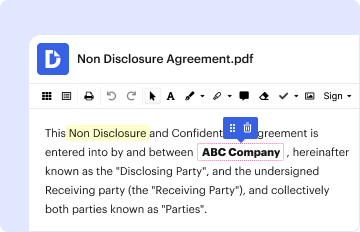
Explore the top toolbar to add document fields. Add and arrange text boxes, the signature block (if applicable), insert images, etc.

Step 6: Prepare and customize the incorporated fields.

Arrange the fillable areas you incorporated per your preferred layout. Modify each field's size, font, and alignment to make sure the form is easy to use and professional.

Step 7: Finalize and share your form.

Save the completed copy in DocHub or in platforms like Google Drive or Dropbox, or craft a new United States Civil Law Form. Share your form via email or get a public link to reach more people.


be ready to get more

Build your United States Civil Law Form in minutes

Start creating now

Got questions?

We have answers to the most popular questions from our customers. If you can't find an answer to your question, please contact us.
Contact us
complainant: Person that wants to start a court case against another person. In a civil case, the complainant is the plaintiff. In a criminal case, the complainant is the state.
plaintiff - The person who files the complaint in a civil lawsuit.
Civil procedure in the United States consists of rules that govern civil actions in the federal, state, and territorial court systems, and is distinct from the rules that govern criminal actions. Like much of American law, civil procedure is not reserved to the federal government in its Constitution.
Civil law, as a legal system, refers to a popular way of structuring legal systems around broad codes and detailed statutes that determines the rights and obligations of individuals, without any emphasis on the role of precedent, courts, judges, and juries as in common law countries.
The plaintiff is the one who initiates the case, the party who claims they have incurred loss or damage due to the defendants actions or inactions. On the other side is the defendant, the individual, or entity accused of causing the alleged harm.
be ready to get more

Build your United States Civil Law Form in minutes

Start creating now

Related Q&A to United States Civil Law Form

Primary tabs. A plaintiff is the party who initiates a lawsuit in a civil matter. The plaintiff may be an individual or an entity. A plaintiff files a complaint with a court against the defendant, initiating the action.
A civil case is when a person or entity, including a governmental organization or a business, sues another in court, typically for money. There are many reasons someone can sue someone else.
John is seriously injured and he files a car accident lawsuit against Linda to recover additional damages that arent covered by insurance. In this example, John is the plaintiff and Linda is the defendant. Because the plaintiff files the lawsuit, the plaintiff is responsible for drafting the complaint.

Additional resources on building your forms


