

Boost your work productivity with United States Civil Law Forms

Form management occupies to half of your business hours. With DocHub, you can reclaim your time and effort and improve your team's efficiency. Access United States Civil Law Forms collection and check out all form templates relevant to your day-to-day workflows.

Easily use United States Civil Law Forms:

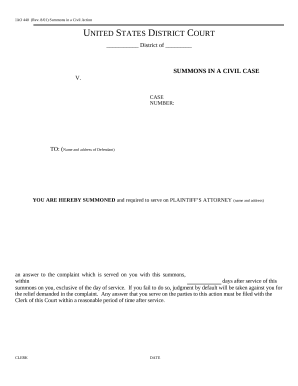
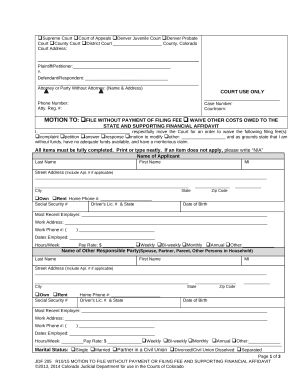
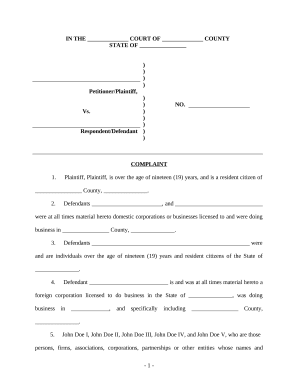
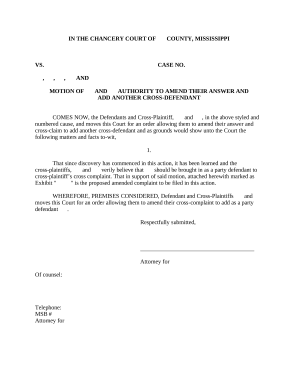
  1. Open United States Civil Law Forms and utilize Preview to get the appropriate form.
  2. Click Get Form to begin working on it.
  3. Wait for your form to upload in the online editor and start editing it.
  4. Add new fillable fields, icons, and pictures, adjust pages, etc.
  5. Fill your file or set it for other contributors.
  6. Download or deliver the form by link, email attachment, or invite.

Accelerate your day-to-day file management using our United States Civil Law Forms. Get your free DocHub profile right now to discover all forms.


Commonly Asked Questions about United States Civil Law Forms

Civil procedure in the United States consists of rules that govern civil actions in the federal, state, and territorial court systems, and is distinct from the rules that govern criminal actions. Like much of American law, civil procedure is not reserved to the federal government in its Constitution.
Tells the court some basic information about a case being filed. Filed at the beginning of all civil cases except family law cases. Get form CM-010. Effective: January 1, 2024.
General civil cases, usually involving suing someone for money in disputes over things like contracts, damage to property, or someone getting hurt. Family law cases such as divorce, child support, child custody, and adoptions.
The three most common civil cases are tort claims, contract bdocHubes and landlord/tenant issues. The general stages of a civil case are filing a complaint, building discovery, going to trial, and appealing the judgement.
In their technical, narrow sense, the words civil law describe the law that pertains to persons, things, and relationships that develop among them, excluding not only criminal law but also commercial law, labor law, etc.
Four of the most important types of civil law deal with 1) contracts, 2) property, 3) family relations, and 4) civil wrongs causing physical injury or injury to property (tort).
Most civil lawsuits for injuries allege the wrongdoer was negligent. To win in a negligence lawsuit, the victim must establish 4 elements: (1) the wrongdoer owed a duty to the victim, (2) the wrongdoer bdocHubed the duty, (3) the bdocHub caused the injury (4) the victim suffered damages.
There are four main types of laws: constitution, statutes, regulations, and common laws. Responsibility surrounding these four main types of law is distributed among the three branches of the United States government, which are the executive branch, legislative branch, and judicial branch.