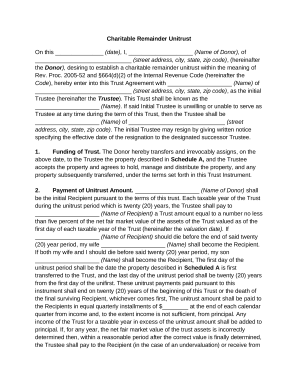
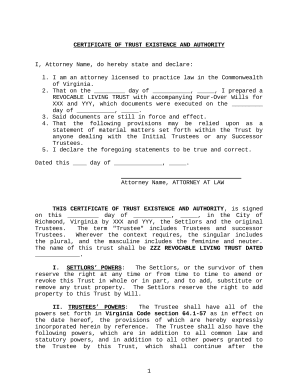
Raise your output with trusts legal forms

Papers managing occupies to half of your business hours. With DocHub, it is easy to reclaim your time and effort and improve your team's efficiency. Access trusts legal forms collection and explore all document templates related to your everyday workflows.

Easily use trusts legal forms:

  1. Open trusts legal forms and use Preview to get the appropriate form.
  2. Click Get Form to begin working on it.
  3. Wait for your form to upload in our online editor and start modifying it.
  4. Add new fillable fields, icons, and images, adjust pages order, and many more.
  5. Complete your file or set it for other contributors.
  6. Download or share the form by link, email attachment, or invite.

Boost your everyday document managing with our trusts legal forms. Get your free DocHub account right now to discover all templates.


Video Guide on trusts legal forms management

video background

Commonly Asked Questions about trusts legal forms

Irrevocable trusts are an effective way to remove assets from your taxable estate. Revocable trusts can help your estate avoid probate but they dont reduce your estate tax liability.
The big keys you need to make a trust are: Intent to make a trust (California Probate Code section 15201); Mental Capacity to make a trust; A trust must have property (PC 15202) There must be a legal purpose to trust (PC15203) A trust must have a beneficiary (PC 15205)
In simple words, a trust is nothing but a transfer of property by the owner (Mr X) to another person in whom the owner has confidence (Mr Y) for the benefit of a third person (Granddaughter of X). The property doesnt just mean real estate. It could be cash, shares or any other valuable asset. Indian Trusts Act - Objectives, Registration and Taxation - ClearTax cleartax.in indian-trusts-act cleartax.in indian-trusts-act
An irrevocable trust offers your assets the most protection from creditors and lawsuits. Assets in an irrevocable trust arent considered personal property. This means theyre not included when the IRS values your estate to determine if taxes are owed.
An irrevocable trust provides you with more protection. While you cant modify it, creditors cant easily make claims against it, and assets held within it can generally be passed on to beneficiaries without being subject to estate tax.
Trusts can be broadly categorized into four main types: Living Trusts, Testamentary Trusts, Revocable Trusts, and Irrevocable Trusts.
Here are some of the most common options: Bare trust this is the simplest kind of trust. Interest in possession trust the beneficiary can get income from the trust straight away, but doesnt have a right to the cash, property or investments that generate that income.
Perhaps the biggest potential downside to a trust is the incredibly high need for competency. Whichever trust you set up, youll need to give ownership and administration control to the trustee for the entire instrument.
What Are the Disadvantages of a Trust? Loss of Control. Setting up the trust necessitates you giving up some amount of control of the assets you place within the trust. Loss of Asset Access. Cost. Recordkeeping Complexity. High Need for Competency.