
Create your Trust and Estate Planning Form from scratch

Start Building Now
Title decoration

Here's how it works

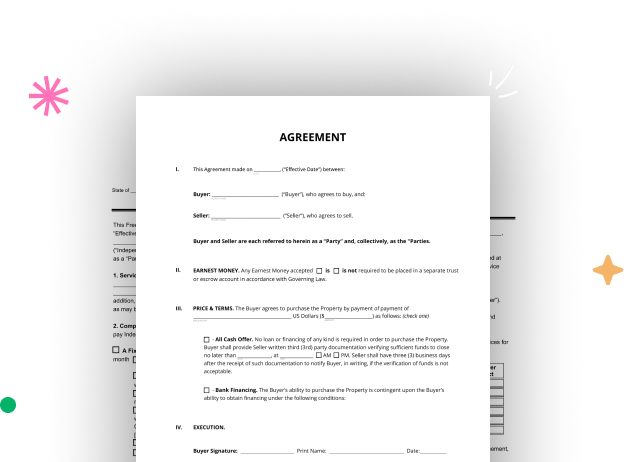
01. Start with a blank Trust and Estate Planning Form
Open the blank document in the editor, set the document view, and add extra pages if applicable.
02. Add and configure fillable fields
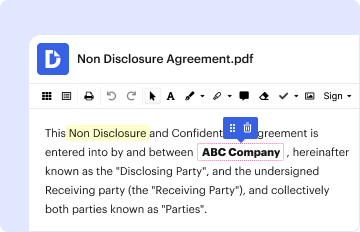
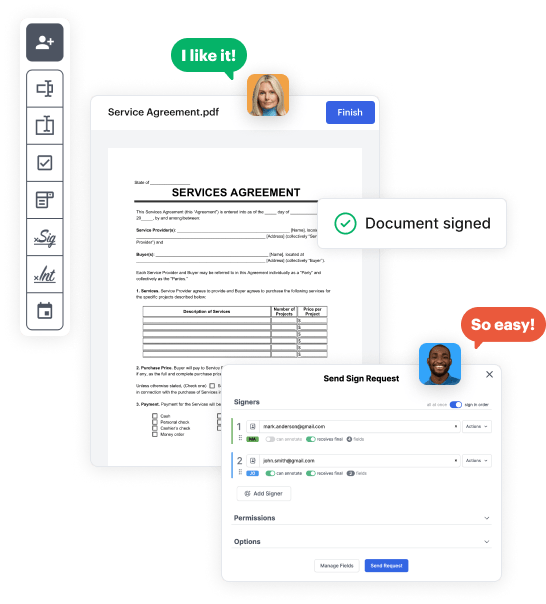
Use the top toolbar to insert fields like text and signature boxes, radio buttons, checkboxes, and more. Assign users to fields.
03. Distribute your form
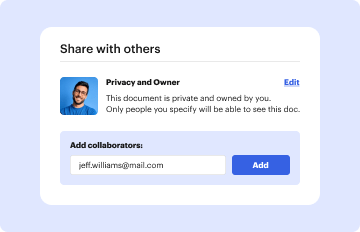
Share your Trust and Estate Planning Form in seconds via email or a link. You can also download it, export it, or print it out.

A simple guide on how to set up a polished Trust and Estate Planning Form

Form edit decoration

Step 1: Log in to DocHub to begin creating your Trust and Estate Planning Form.

First, log in to your DocHub account. If you don't have one, you can easily sign up for free.

Step 2: Head to the dashboard.

Once signed in, access your dashboard. This is your main hub for all document-based operations.

Step 3: Start new document creation.

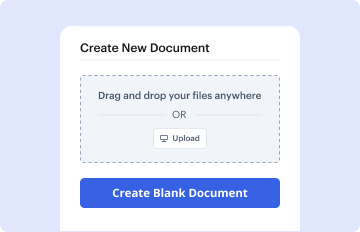
In your dashboard, select New Document in the upper left corner. Choose Create Blank Document to put together the Trust and Estate Planning Form from a blank slate.

Step 4: Add form fillable areas.

Add numerous elements like text boxes, images, signature fields, and other interactive areas to your form and assign these fields to intended users as needed.

Step 5: Personalize your document.

Refine your document by including instructions or any other necessary details utilizing the text feature.

Step 6: Double-check and adjust the form.

Meticulously check your created Trust and Estate Planning Form for any typos or required adjustments. Utilize DocHub's editing capabilities to perfect your document.

Step 7: Distribute or download the document.

After completing, save your copy. You can select to save it within DocHub, export it to various storage services, or send it via a link or email.


be ready to get more

Build your Trust and Estate Planning Form in minutes

Start creating now

Got questions?

We have answers to the most popular questions from our customers. If you can't find an answer to your question, please contact us.
Contact us
Trusts and estates are the two main legal structures for transferring assets to your heirs and beneficiaries. Each works in critically different ways. Estates make a one-time transfer of your assets after death. Trusts, meanwhile, allow you to create an ongoing transfer of assets both before and after death.
The difference between a will and an estate plan is that while a will is a single document, and an estate plan includes all legal documents to protect your heirs and assets while you are still alive, if you become seriously ill or incapacitated and after your death.
A revocable living trust provides you with more flexibility. You can use it to protect your assets in case of incapacity and to avoid having assets transfer through probate, but cannot use it to protect against creditor claims or avoid estate taxes. An irrevocable trust provides you with more protection.
A will is a simple legal document that provides instructions on how to distribute property to beneficiaries after death, while a trust is a complex legal arrangement that allows you to transfer ownership of property, is managed by a third party, and is distributed to beneficiaries at any time determined by the creator
While an Estate is merely the total value of a persons assets after they pass away, a Trust is a legal entity designed to hold, manage and distribute assets on behalf of beneficiaries.
be ready to get more

Build your Trust and Estate Planning Form in minutes

Start creating now

Related Q&A to Trust and Estate Planning Form

Trusts protect your estate by taking ownership out of your hands and assigning different rules or conditions to the assets held within them. LLCs protect your wealth by separating your personal liability from that of your company, insulating your assets from some forms of legal attack.
What Is Legacy Planning? Legacy planning is the process of preparing how you are going leave your assets and property to your loved ones following your passing. Its practically a synonym of estate planning, but the terminology has undergone popularity with financial advisors recently.
How To Set Up a Trust in Texas Appoint a trustee to manage the trust, but you can name yourself; Name a successor trustee for when you pass away; Describe the property you want to place in the trust; Name the trusts beneficiaries; and. Explain how the trustee should allocate the property to the named beneficiaries.

Additional resources on building your forms


