
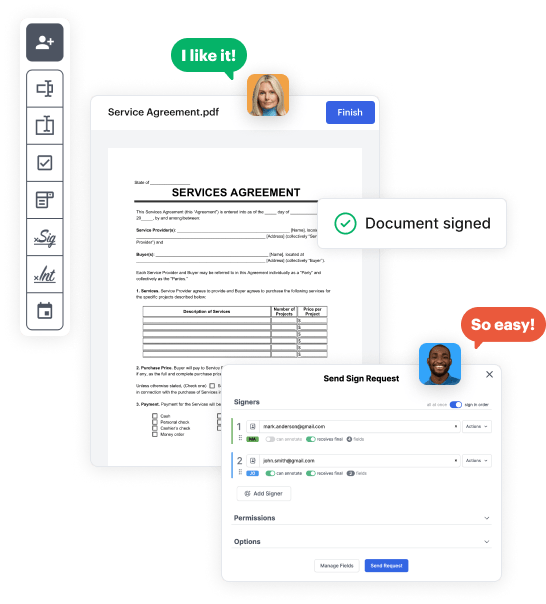
Create your Tenant-Landlord Legal Document from scratch

Start Building Now
Title decoration

Here's how it works

01. Start with a blank Tenant-Landlord Legal Document
Open the blank document in the editor, set the document view, and add extra pages if applicable.
02. Add and configure fillable fields
Use the top toolbar to insert fields like text and signature boxes, radio buttons, checkboxes, and more. Assign users to fields.
03. Distribute your form
Share your Tenant-Landlord Legal Document in seconds via email or a link. You can also download it, export it, or print it out.

A detailed walkthrough of how to build your Tenant-Landlord Legal Document online

Form edit decoration

Step 1: Start with DocHub's free trial.

Visit the DocHub website and sign up for the free trial. This provides access to every feature you’ll need to build your Tenant-Landlord Legal Document without any upfront cost.

Step 2: Access your dashboard.

Sign in to your DocHub account and go to the dashboard.

Step 3: Craft a new document.

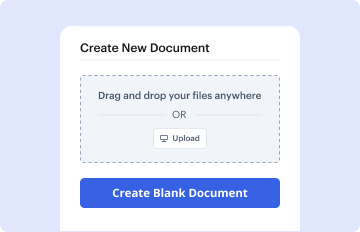
Click New Document in your dashboard, and choose Create Blank Document to create your Tenant-Landlord Legal Document from the ground up.

Step 4: Utilize editing tools.

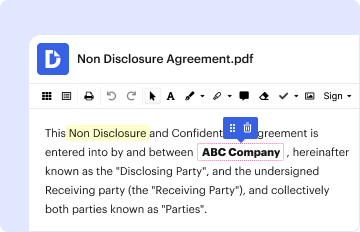
Add different elements such as text boxes, radio buttons, icons, signatures, etc. Organize these elements to match the layout of your form and designate them to recipients if needed.

Step 5: Modify the form layout.

Organize your form quickly by adding, repositioning, removing, or combining pages with just a few clicks.

Step 6: Craft the Tenant-Landlord Legal Document template.

Convert your newly designed form into a template if you need to send multiple copies of the same document multiple times.

Step 7: Save, export, or distribute the form.

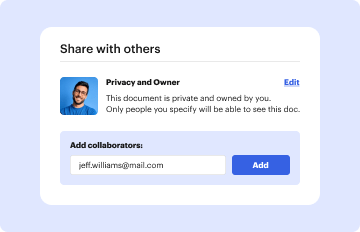
Send the form via email, distribute a public link, or even post it online if you wish to collect responses from a broader audience.


be ready to get more

Build your Tenant-Landlord Legal Document in minutes

Start creating now

Got questions?

We have answers to the most popular questions from our customers. If you can't find an answer to your question, please contact us.
Contact us
A wave of new legislation strengthening tenant protections in California goes into effect in 2024. These laws limit evictions, cap security deposits, extend rent control, and make it easier for tenants to fight back against landlords trying to skirt housing regulations.
12 Rental Disclosures That Landlords in California Need to Give Landlord Contact Information. Rental Agreement Disclosure. Registered Sex Offender Database. Information about Bedbugs. Pest Control Notice. Presence of Mold. Lead-Based Paint. Intent to Demolish.
The Tenant Protection Act places limits on annual rent increases (Civil Code, 1947.12) and restricts the types of allowable evictions in residential rental properties (Civil Code, 1946.2). Who must comply with the TPA? Most residential landlords and property managers must comply with the TPA.
Landlords Responsibilities California Civil Code section 1941 states that when a landlord rents property to a tenant as a place to live, the property must be in a habitable condition. (Habitable means fit to live in; uninhabitable means not fit to live in.)
California Civil Code 1954, a key law governing the landlord-tenant relationship, provides guidelines on a landlords right to enter a rental property. This law has been in effect since the 1970s and seeks to balance the rights of both landlords and tenants when it comes to entry into a rental unit.
be ready to get more

Build your Tenant-Landlord Legal Document in minutes

Start creating now

Related Q&A to Tenant-Landlord Legal Document

ing to California landlord-tenant laws, tenants have the right to live in safe, habitable rental units, as well as sue the landlord for retaliation, withhold rent for failure to provide essential services, recover attorneys fees, and more.
Generally, the lease agreement outlines who is allowed to live in the rental property. If someone is living there without being listed on the lease, it could be a violation of the lease terms. However, simply having someone not on the lease living at the property may not be enough to initiate an eviction.

Additional resources on building your forms


