Handle Tenant-Landlord Legal Documents easily online

Document managing can overpower you when you can’t locate all the forms you require. Fortunately, with DocHub's extensive form library, you can find everything you need and easily manage it without switching among apps. Get our Tenant-Landlord Legal Documents and begin utilizing them.

How to use our Tenant-Landlord Legal Documents using these basic steps:

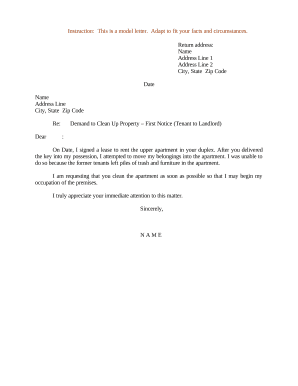
  1. Check Tenant-Landlord Legal Documents and choose the form you require.
  2. Preview the template and click on Get Form.
  3. Wait for it to upload in the online editor.
  4. Change your form: add new information and images, and fillable fields or blackout some parts if required.
  5. Prepare your form, preserve adjustments, and prepare it for sending.
  6. When ready, download your form or share it with other contributors.

Try out DocHub and browse our Tenant-Landlord Legal Documents category easily. Get a free account today!


Video Guide on Tenant-Landlord Legal Documents management

video background

Commonly Asked Questions about Tenant-Landlord Legal Documents

A month-to-month tenancy may be terminated by either party. If the landlord plans to terminate, they must give notice on the same timeline as terminating non-regulated leases (as described on the previous page). Outside of New York City, the tenant must give one months notice to terminate the tenancy.
Tenants have the right to privacy in their rented homes and can refuse entry to landlords who do not provide proper notice or have an illegitimate reason for entry. If this right is violated, tenants can take legal action to prevent continued violations and potentially seek damages.
If you do not have a lease, or your lease expired, you pay rent on a monthly basis. This is called a month-to-month tenancy. In order to end a month-to-month tenancy, either you or your landlord must give at least one months notice before the end of the month.
The termination notice does not need to specify why the landlord seeks possession of the apartment. Month to Month tenancies can be terminated by either the landlord or the tenant, for any reason, or for no reason at all, except if the reason is retaliatory (RPL 223-b).
There is often no lease in a month-to-month tenancy, which may be ended by the landlord or the tenant. However, notice must be given at least one month before your next rent payment is due. Public housing authority leases have their own regulations and specific lease conditions.
What are the responsibilities of my landlord? Owners must ensure that buildings are safe, clean and well maintained, in both common areas and in individual apartments. Among other responsibilities, owners must provide and maintain security measures, heat, hot and cold water, and good lighting.
While it is not required, it is recommended to include the rent amount, rent due date, and lease length, along with other information in the lease agreement. To break a lease or change its terms, such as increasing rent, a landlord must provide a 60-day written notice for leases of a year but less than two.
no limit on how much your landlord can increase your rent. However, your landlord must give you advanced written notice before they can raise your rent 5% or more. advance written notice. This applies to month-to-month tenants without a lease as well.