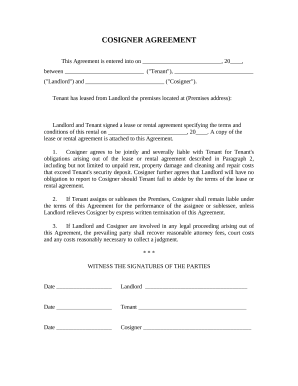
Transform your file managing with Tenant Guaranty Agreement

Your workflows always benefit when you can obtain all of the forms and files you need on hand. DocHub gives a a huge library of form templates to alleviate your day-to-day pains. Get a hold of Tenant Guaranty Agreement category and quickly find your document.

Begin working with Tenant Guaranty Agreement in several clicks:

  1. Open Tenant Guaranty Agreement and locate the document you need.
  2. Click Get Form to open it in the editor.
  3. Begin adjusting your form: add fillable fields, highlight paragraphs, or blackout sensitive details.
  4. The application saves your adjustments automatically, and once you are ready, you can download or share your form with other contributors.

Enjoy effortless record management with DocHub. Explore our Tenant Guaranty Agreement online library and discover your form today!


Video Guide on Tenant Guaranty Agreement management

video background

Commonly Asked Questions about Tenant Guaranty Agreement

A guaranty agreement, in the realm of commercial insurance, refers to a legally binding contract where one party, known as the guarantor, promises to be responsible for the obligations or debts of another party, known as the debtor, if they fail to fulfill their financial commitments.
The Guarantee Clause requires the United States to guarantee to the states a republican form of government, and provide protection from foreign invasion and domestic violence. Although rarely formally invoked by Congress, the President, or the courts, there is some consensus on what it means.
It is a risk management tool used to protect lenders and creditors, ensuring that they have recourse if the debtor is unable to fulfill their financial obligations.
A lease guaranty is a contract between an individual or entity (guarantor) that is typically related to the tenant. The guarantor promises to pay the landlord any and all payments due under the lease in the event the tenant defaults under its lease obligations and otherwise cure the tenants defaults.
In order for a guaranty agreement to be enforceable, it has to be in writing, the writing has to be signed by the guarantor, and the writing has to contain each of the following essential elements: 1. the identity of the lender; 2. the identity of the primary obligor; 3.
In a guaranteed contract, the surety guarantees loan repayment on behalf of the person who took the loan but continued to fail to repay the debts. As a result, it seeks to protect the other party from a loss. The Indian Contract Act,1872, controls the Contract of guarantee.
In a lease context, a guaranty is the agreement by a party, not the tenant, to indepen- dently guarantee the complete performance of the tenants lease obligations. A guaranty typically is styled as a separate agreement between the landlord and the guarantor.
A guaranty involves a third-party entity providing financial assurance for a contractors performance, while a guarantee typically refers to the warranties offered by contractors or manufacturers for the quality and performance of their work or products.