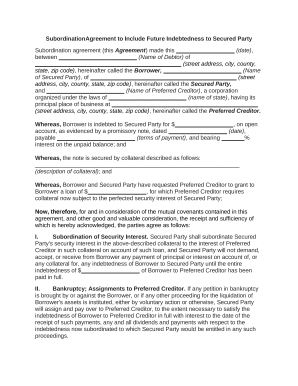
Manage Subordination Agreement easily online

Document administration can overpower you when you can’t find all of the forms you require. Luckily, with DocHub's extensive form library, you can find all you need and promptly take care of it without the need of changing between applications. Get our Subordination Agreement and start utilizing them.

The best way to manage our Subordination Agreement using these simple steps:

  1. Browse Subordination Agreement and select the form you require.
  2. Preview the template and then click Get Form.
  3. Wait for it to upload in the online editor.
  4. Alter your form: add new information and images, and fillable fields or blackout some parts if needed.
  5. Prepare your form, conserve modifications, and prepare it for delivering.
  6. When ready, download your form or share it with other contributors.

Try out DocHub and browse our Subordination Agreement category with ease. Get a free profile right now!


Video Guide on Subordination Agreement management

video background

Commonly Asked Questions about Subordination Agreement

Subordination agreements offer numerous benefits for lenders and investors in real estate transactions. They provide protection for senior lenders, enhance collateral value, offer access to additional financing, provide flexibility for junior lenders and investors, and mitigate risks for all parties involved.
Refinancing happens when the initial loan has been fully paid and a new lender offers a loan under a new interest rate. A subordination clause will then be used to give priority to this new lender and ensure they are the top priority for repayment.
A subordination agreement is generally used when there are two mortgages and the mortgagor needs to refinance the first mortgage. It acknowledges that one partys interest or claim is superior to another in case the borrowers assets need to be liquidated to repay debts.
A subordination agreement adjusts the priority of mortgages. It moves a refinance loan up to the front of the line. A subordination agreement is a contract to prioritize one debt over another for repayment. The agreement establishes that one partys claim is superior to another partys interest.
A mortgage subordination refers to the order the outstanding liens on your property get repaid if you stop making your mortgage payments. For example, your first home loan (primary mortgage) is repaid first, with any remaining funds paying off additional liens, including second mortgages, HELOCs and home equity loans.
A subordination clause is a clause in an agreement that states that the current claim on any debts will take priority over any other claims formed in other agreements made in the future. Subordination is the act of yielding priority.
The party that primarily benefits from a subordination clause in real estate is the lender. However, if you decide to pursue a second mortgage, then the subordination clause prioritizes the first lenders repayment and contract rights. The most common application of subordination clauses is when refinancing a property.