Get and handle South Carolina Landlord-Tenant Notices online

Speed up your file administration with our South Carolina Landlord-Tenant Notices collection with ready-made document templates that meet your requirements. Access the form, alter it, fill it, and share it with your contributors without breaking a sweat. Begin working more efficiently together with your documents.

The best way to use our South Carolina Landlord-Tenant Notices:

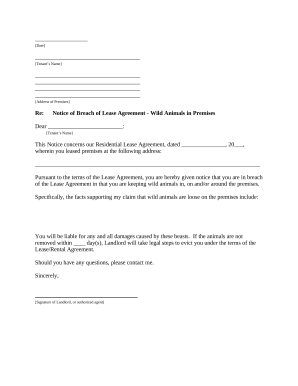
  1. Open our South Carolina Landlord-Tenant Notices and look for the form you want.
  2. Preview your form to ensure it’s what you want, and click on Get Form to begin working on it.
  3. Change, include new text, or highlight important information with DocHub features.
  4. Fill out your form and preserve the changes.
  5. Download or share your form with other recipients.

Examine all of the possibilities for your online document administration using our South Carolina Landlord-Tenant Notices. Get a free free DocHub account today!


Video Guide on South Carolina Landlord-Tenant Notices management

video background

Commonly Asked Questions about South Carolina Landlord-Tenant Notices

The landlord can evict the tenant for a lease violation in South Carolina. The landlord must provide the tenant a 14-Day Notice to Comply. This 14-day notice gives the tenant 14 days to fix the issue.
Remember: Your landlord must file in court to have you legally evicted. Your landlord cannot legally force you to leave any other way, like by changing your door locks, turning off the power, or putting your property outside. The law says that you should receive a legal eviction notice that you are about to be evicted.
Eviction Process in South Carolina Landlord Serves a Zero- to 14-Day Eviction Notice. Landlord Files an Eviction Lawsuit with the Court. Court Serves Tenant a Summons. Tenant Files an Answer. Landlord and Tenant Attend Court Hearing and Receive Judgment. Tenant Gets 24 Hours to Move Out.
In South Carolina, a landlord can evict a tenant for a variety of reasons, including not paying rent or violating the lease or rental agreement. However, a tenant may be able to fight the eviction with a valid defense.
For a week-to-week lease, the tenant or the landlord can end the lease by giving seven days written notice before the end of the lease term. For a month-to-month or for a one-year lease, the tenant or landlord can end the lease by giving one months written notice before the end of the lease term.
(SC Stat. 27-37-30). The tenant must appear and show cause why they shouldnt be evicted to avoid being removed from the rental unit. If they do not, the landlord will automatically win, and the court will issue a warrant of ejectment (SC Stat.
Under the Residential Landlord-Tenant Act, a tenant may bring an action against the landlord for recovery of damages or to obtain legal relief for any violations by the Landlord. These remedies will be discussed later. A tenant is responsible for paying rent on time.