Get and handle Sample Case 1 Legal Forms online

Improve your file managing with the Sample Case 1 Legal Forms library with ready-made document templates that meet your requirements. Get your form, alter it, complete it, and share it with your contributors without breaking a sweat. Start working more effectively with the forms.

The best way to manage our Sample Case 1 Legal Forms:

  1. Open our Sample Case 1 Legal Forms and find the form you require.
  2. Preview your form to ensure it’s what you want, and click Get Form to start working on it.
  3. Change, add new text, or highlight important information with DocHub features.
  4. Prepare your form and save the adjustments.
  5. Download or share your form template with other people.

Explore all of the opportunities for your online document administration with the Sample Case 1 Legal Forms. Get your free free DocHub account right now!


Video Guide on Sample Case 1 Legal Forms management

video background

Commonly Asked Questions about Sample Case 1 Legal Forms

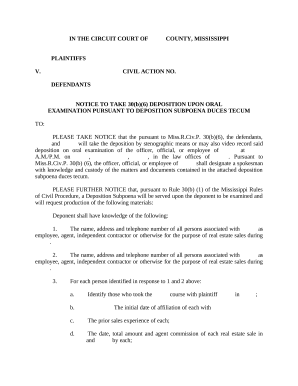
What is a subpoena? A subpoena is a formal court order requiring a witness to appear in court. A subpoena may also require a witness to bring documents or other items with them to court.
subpoena - A command to a witness to appear and give testimony. subpoena duces tecum - A command to a witness to produce documents. summary judgment - A decision made on the basis of statements and evidence presented for the record without a trial.
A subpoena is a legal document that commands a person or entity to testify as a witness at a specified time and place (at a deposition, trial, or other hearing), and/or to produce documents or other tangible objects in a legal proceeding.
Legal forms address substantive matters, such as forms for contracts, wills, and leases. Pleading and practice forms provide language used in pleadings and motions filed with a court in litigation. These supply language for complaints, answers, motions to dismiss, and other motions.
A subpoena is a court order that requires a party (or a witness who is not a party) to come to court to testify. It can also require the person to bring certain papers to the court hearing or trial.
Case law is all of the previous decisions made by judges. It is created by judges in their rulings when they write their decisions and give the reasoning behind them. These decisions are often called opinions and, in them, judges often cite precedents from other cases and statutes that influenced their decisions.