


Create your Rhode Island Housing Law from scratch

Start Building Now
Title decoration

Here's how it works

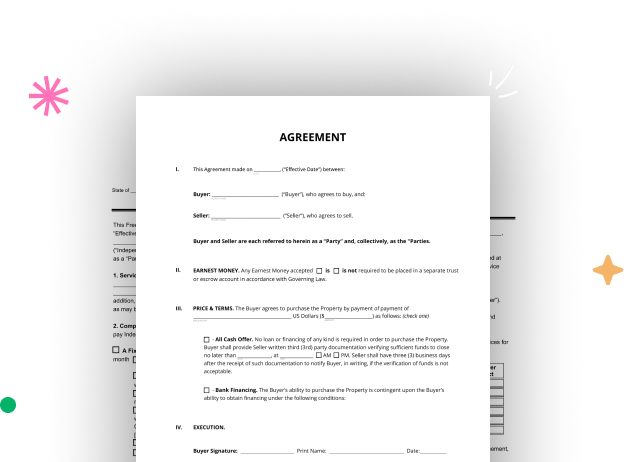
01. Start with a blank Rhode Island Housing Law
Open the blank document in the editor, set the document view, and add extra pages if applicable.
02. Add and configure fillable fields
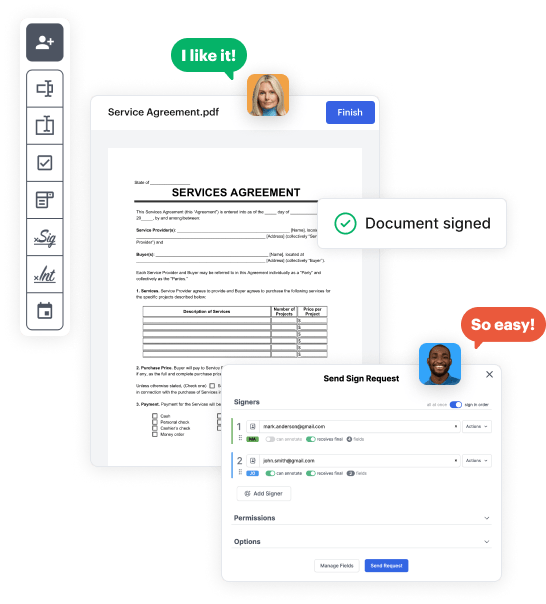
Use the top toolbar to insert fields like text and signature boxes, radio buttons, checkboxes, and more. Assign users to fields.
03. Distribute your form
Share your Rhode Island Housing Law in seconds via email or a link. You can also download it, export it, or print it out.

A brief guide on how to create a polished Rhode Island Housing Law

Form edit decoration

Step 1: Log in to DocHub to begin creating your Rhode Island Housing Law.

First, sign in to your DocHub account. If you don't have one, you can easily sign up for free.

Step 2: Go to the dashboard.

Once signed in, navigate to your dashboard. This is your central hub for all document-based processes.

Step 3: Start new document creation.

In your dashboard, choose New Document in the upper left corner. Select Create Blank Document to create the Rhode Island Housing Law from a blank slate.

Step 4: Add form elements.

Place numerous fields like text boxes, photos, signature fields, and other interactive areas to your form and designate these fields to specific recipients as necessary.

Step 5: Fine-tune your document.

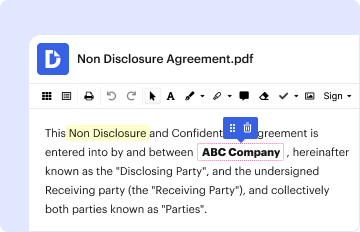
Personalize your template by incorporating instructions or any other vital information using the text feature.

Step 6: Go over and modify the form.

Carefully examine your created Rhode Island Housing Law for any mistakes or required adjustments. Take advantage of DocHub's editing tools to perfect your document.

Step 7: Send out or export the document.

After completing, save your work. You may opt to retain it within DocHub, export it to various storage solutions, or forward it via a link or email.


be ready to get more

Build your Rhode Island Housing Law in minutes

Start creating now

Got questions?

We have answers to the most popular questions from our customers. If you can't find an answer to your question, please contact us.
Contact us
(2)(i) In every dwelling unit for two (2) or more rooms, every room occupied for sleeping purposes must contain at least seventy (70) square feet of floor space for the first occupant, and at least fifty (50) square feet of floor space for each additional occupant.
The law, signed by Democratic Gov. Dan McKee on June 25, lets homeowners create a single accessory dwelling unit, or ADU, on an owner-occupied property to encourage rental units that are likely to be more affordable than many other apartments.
The Create Homes Act will allow the Department of Housing to address the housing crisis by: Authorizing the Department of Housing to fund, contract, and build mixed-income housing. Creating a land bank to recapture and develop housing on underutilized public property. Housing Justice Legislation | Reclaim RI Reclaim RI campaign housing-justice-l Reclaim RI campaign housing-justice-l
Under Rhode Island landlord regulations, it is the landlords legal obligation to provide tenants with safe and habitable dwellings. This involves the upkeep of vital structural and utility systems within the property.
FAIR HOUSING PRACTICES ACT Newly passed legislation in Rhode Island now makes it illegal to discriminate against a potential tenant based on their source of income. This includes discriminating against tenants because they receive a housing choice voucher. Landlords | RIHousing RIHousing landlords RIHousing landlords
be ready to get more

Build your Rhode Island Housing Law in minutes

Start creating now

Related Q&A to Rhode Island Housing Law

ADU in Rhode Island They are allowed for anyone who has a family member or relative in which an ADU would be suitable for. The only other requirement, for some towns, is that any addition, attached or detached, match the style of the surrounding neighborhood. Accessory Dwelling Units: ADU - HousingWorks RI HousingWorks RI learning-center acce HousingWorks RI learning-center acce
(4) A dwelling unit must not be occupied by more than one family plus two (2) occupants unrelated to the family, except for guests or domestic employees or by not more than one household if the occupants are unrelated, unless a permit for a rooming house has been granted by the appropriate authority.


