Get and handle Rental Property Regulations online

Speed up your document operations using our Rental Property Regulations category with ready-made form templates that meet your needs. Access your form, modify it, fill it, and share it with your contributors without breaking a sweat. Start working more effectively with your forms.

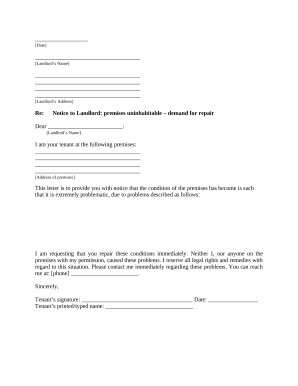
The best way to use our Rental Property Regulations:

  1. Open our Rental Property Regulations and find the form you need.
  2. Preview your document to ensure it’s what you want, and click Get Form to begin working on it.
  3. Modify, include new text, or point out important information with DocHub tools.
  4. Complete your form and preserve the changes.
  5. Download or share your form template with other recipients.

Examine all of the possibilities for your online document administration with the Rental Property Regulations. Get a free free DocHub account right now!


Video Guide on Rental Property Regulations management

video background

Commonly Asked Questions about Rental Property Regulations

no limit on how much your landlord can increase your rent. However, your landlord must give you advanced written notice before they can raise your rent 5% or more. advance written notice. This applies to month-to-month tenants without a lease as well.
What are the responsibilities of my landlord? Owners must ensure that buildings are safe, clean and well maintained, in both common areas and in individual apartments. Among other responsibilities, owners must provide and maintain security measures, heat, hot and cold water, and good lighting.
However, they still must provide advance notice of an increase in rent for a new lease term. For a one-year lease term, landlords must produce a 60-day notice. A two-year lease term or more requires a 90-day notice. Anything shorter than a year warrants a 30-day notice for rent adjustments.
renew your lease or substantially increase your rent. ​Your landlord must give you at least 30 days notice if they are not planning to renew your lease or will raise your rent by more than 5%. If you have been living in your home for over a year, your landlord must give at least 60 days notice.
New York landlords must follow a strict legal process for evictions, which includes serving proper notices, filing a court action, and obtaining a court order before an eviction can take place. Self-help measures such as changing locks or physically removing a tenant are illegal.
The 1% rule states that a rental propertys income should be at least 1% of the purchase price. For example, if a rental property is purchased for $200,000, the monthly rental income should be at least $2,000.
Before they can raise your rent (by 5% or more), the landlord must give you: 90 days notice if you have lived in your apartment two years or more. 60 days notice if you have lived in your apartment for more than one year. 30 days notice if you have lived in your apartment for less than one year.
For a two-year lease beginning on or after October 1, 2023, and on or before September 30, 2024: For the first year of the lease: 2.75% For the second year of the lease: 3.20% of the amount lawfully charged in the first year, excluding any increases other than the first-year guideline increase.