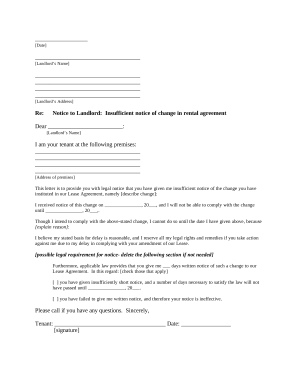
Handle Rental Agreement Change Notices easily online

Document managing can stress you when you can’t locate all the forms you require. Fortunately, with DocHub's extensive form collection, you can find everything you need and swiftly deal with it without the need of switching among software. Get our Rental Agreement Change Notices and start working with them.

Using our Rental Agreement Change Notices using these basic steps:

  1. Browse Rental Agreement Change Notices and choose the form you require.
  2. Review the template and click Get Form.
  3. Wait for it to upload in the online editor.
  4. Modify your form: add new information and images, and fillable fields or blackout certain parts if necessary.
  5. Prepare your form, save changes, and prepare it for delivering.
  6. When you are ready, download your form or share it with other contributors.

Try out DocHub and browse our Rental Agreement Change Notices category with ease. Get your free profile right now!


Video Guide on Rental Agreement Change Notices management

video background

Commonly Asked Questions about Rental Agreement Change Notices

For example, if the landlord wants the tenant to move out by November 1 and the rent is due on the first of each month, the landlord must give notice by September 30. In New York 5 Page 9 City, 30 days notice is required, rather than one month.
A 60-day notice is required for tenants who have lived in an apartment for more than one year, but less than two years, or have a lease of at least one year, but less than two years. Tenants who have lived in a unit for more than two years, or have a lease of at least two years, must get a 90-day notice.
Can you evict a tenant after the lease expires? Yes, if the new lease is provided to you as the landlord and you do not agree to it or return it within 60 days, the landlord can evict you.
This is called a Section 3 Notice and it must be served within two months following the transfer of ownership and contain the new landlords name and address. The new landlord must serve notice to tenants regardless of whether the previous landlord notified tenants.
the landlord of an intention not to renew the lease. (General Obligations Law 5-905). If you have lived in your apartment for less than one year, or have a lease for less than one year, your landlord must provide you with 30 days advanced notice before raising your rent or not renewing your lease.
Before they can raise your rent (by 5% or more), the landlord must give you: 90 days notice if you have lived in your apartment two years or more. 60 days notice if you have lived in your apartment for more than one year. 30 days notice if you have lived in your apartment for less than one year.
If you have been living in your home for over a year, your landlord must give at least 60 days notice. If you have been living in your home for more than 2 years, your landlord must give at least 90 days notice. rent as a security deposit. When you move out, they must return the security deposit within 14 days.