
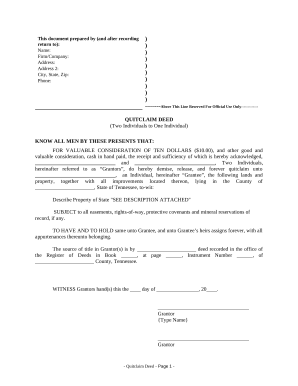
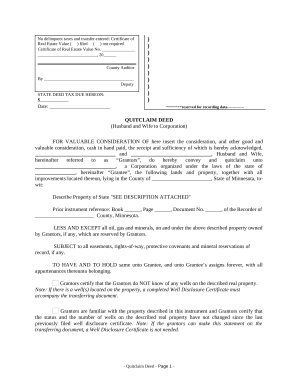
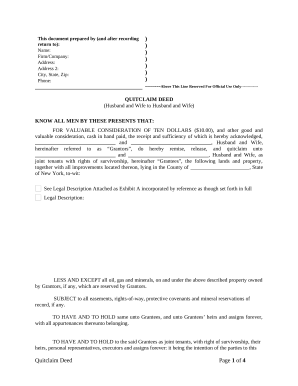
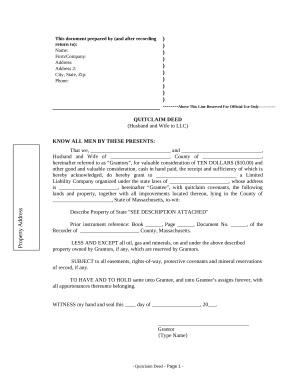
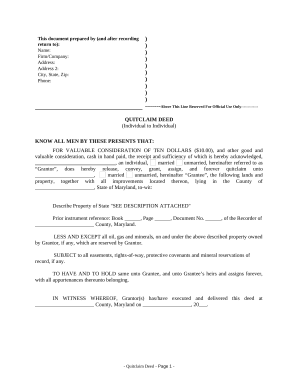
Boost your production with Quitclaim Deed Real Estate Transfer

Form administration takes up to half of your office hours. With DocHub, it is easy to reclaim your office time and improve your team's productivity. Get Quitclaim Deed Real Estate Transfer online library and check out all templates relevant to your everyday workflows.

Effortlessly use Quitclaim Deed Real Estate Transfer:

  1. Open Quitclaim Deed Real Estate Transfer and apply Preview to find the appropriate form.
  2. Click on Get Form to begin working on it.
  3. Wait for your form to open in the online editor and start modifying it.
  4. Add new fillable fields, icons, and images, modify pages, and many more.
  5. Complete your template or set it for other contributors.
  6. Download or share the form by link, email attachment, or invite.

Boost your everyday file administration with the Quitclaim Deed Real Estate Transfer. Get your free DocHub account right now to discover all forms.


Video Guide on Quitclaim Deed Real Estate Transfer management

video background

Commonly Asked Questions about Quitclaim Deed Real Estate Transfer

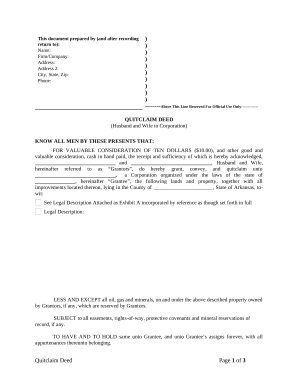
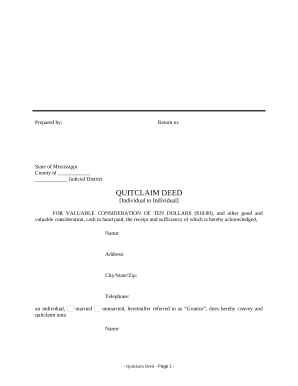
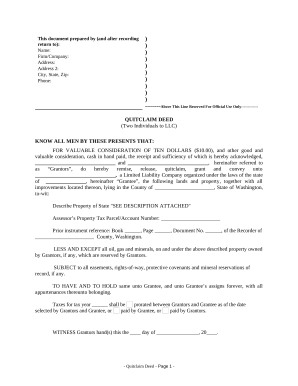
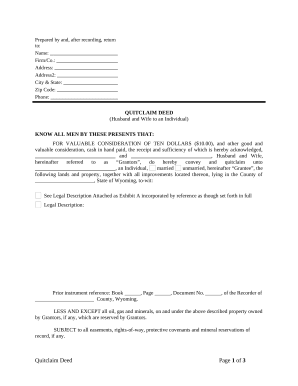
How much is a quit claim deed in MD? For a flat fee of $240 - $250 in most cases (plus governmental recording fees) the firm can in most circumstances have an attorney prepared deed ready for signature in 2-4 business days.
It can be used to release a nominal real estate interest as it can effectively transfer whatever interest the grantor has, regardless of its value. However, a quitclaim deed cannot be used to warrant that a title is valid since it does not guarantee the grantors ownership interest.
A docHub disadvantage to a buyer receiving a quitclaim deed is the lack of warranties and guarantees about the propertys title. Unlike other types of deeds, a quitclaim deed does not assure that the grantor has a valid ownership interest in the property or that the property is free from liens or encumbrances.
What are the Disadvantages of a Quit Claim Deed? No Protections For The Transaction: Unlike warranty deeds, a quitclaim deeds does not offer protections for the new property owner. There is no way to guarantee that the property is owned free and clear, and that there are no easements or restrictions.
Quitclaim deeds themselves are not directly reported to the IRS. However, the transfer of property using a quitclaim deed can have tax implications that may need to be reported, depending on the specifics of the transaction.
Quitclaim deeds lack certain protections and promises found in other types of deed to real property. Because of this, they should only be used under certain circumstances. These include transferring real estate between close family membersfor instance, from a parent to a child.
