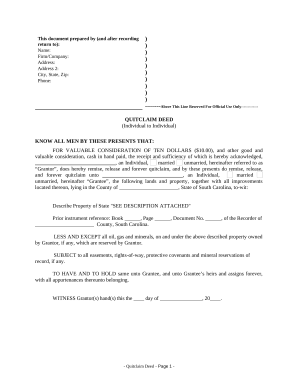
Handle Quitclaim Deed from Individual to Individual effortlessly online

Document administration can overwhelm you when you can’t find all of the forms you need. Fortunately, with DocHub's substantial form collection, you can discover everything you need and promptly take care of it without changing among apps. Get our Quitclaim Deed from Individual to Individual and start working with them.

The best way to manage our Quitclaim Deed from Individual to Individual using these simple steps:

  1. Browse Quitclaim Deed from Individual to Individual and choose the form you need.
  2. Preview the template and click Get Form.
  3. Wait for it to upload in the online editor.
  4. Alter your document: include new information and images, and fillable fields or blackout certain parts if necessary.
  5. Complete your document, preserve changes, and prepare it for delivering.
  6. When you are ready, download your form or share it with your contributors.

Try out DocHub and browse our Quitclaim Deed from Individual to Individual category easily. Get your free profile today!


Commonly Asked Questions about Quitclaim Deed from Individual to Individual

It can be used to release a nominal real estate interest as it can effectively transfer whatever interest the grantor has, regardless of its value. However, a quitclaim deed cannot be used to warrant that a title is valid since it does not guarantee the grantors ownership interest.
What are the Disadvantages of a Quit Claim Deed? No Protections For The Transaction: Unlike warranty deeds, a quitclaim deeds does not offer protections for the new property owner. There is no way to guarantee that the property is owned free and clear, and that there are no easements or restrictions.
The quit claim deed Minnesota transfers your interest in the property as is, and frees you from potential legal liability for the property unless the deed was improperly written or fraudulent.
An interspousal transfer deed is used to transfer the property title from one spouse to another. This special type of deed is most commonly used in the case of divorce, when the proceedings result in the requirement that property goes to one spouse over the other.
A quitclaim deed transfers the title of a property from one person to another, with little to no buyer protection. The grantor, the person giving away the property, gives their current deed to the grantee, the person receiving the property. The title is transferred without any amendments or additions.
A: Yes, a quitclaim deed can protect you by getting the deed in your own name exclusively. This is possible through a divorce proceeding or your spouse can sign a quitclaim to relinquish his rights to the property. If the mortgage is in your spouses name, it doesnt mean he has an ownership interest.