Get and manage Property Rights online

Boost your form administration with our Property Rights online library with ready-made templates that meet your requirements. Get your form, change it, complete it, and share it with your contributors without breaking a sweat. Begin working more efficiently with the documents.

How to use our Property Rights:

  1. Open our Property Rights and search for the form you want.
  2. Preview your form to ensure it’s what you want, and click on Get Form to begin working on it.
  3. Modify, add new text, or point out important information with DocHub tools.
  4. Complete your form and preserve the adjustments.
  5. Download or share your form template with other recipients.

Explore all the possibilities for your online file management with the Property Rights. Get a free free DocHub profile right now!


Video Guide on Property Rights management

video background

Commonly Asked Questions about Property Rights

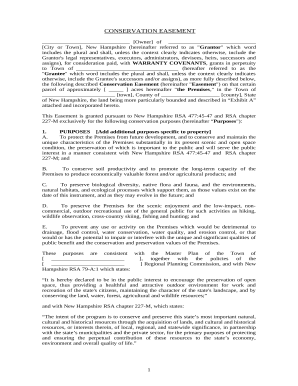
The property rights definition pertains to both the theoretical and legal ownership of an object, piece of property, or another tangible or intangible object. Property rights usually include: Authority to use the object or land as the owner sees fit (such as to lease, sell, or destroy the land);
Private property rights are important in our society and are an essential part of the allure of owning real estate. Property owners typically have several rights, including the right of possession, control, exclusion, enjoyment and disposition.
A property owner in California enjoys a number of rights collectively known as the bundle of rights. These five rights associated with owning real property are: (1) possession; (2) control; (3) exclusion; (4) enjoyment and (5) disposition.
The Fifth Amendment of the U.S. Constitution provides that [n]o person shall be deprived of life, liberty or property without due process of law; nor shall private property be taken for public use, without just compensation.
Thus, the three basic elements of private property are (1) exclusivity of rights to choose the use of a resource, (2) exclusivity of rights to the services of a resource, and (3) rights to exchange the resource at mutually agreeable terms.
The creation of intellectual property is an exciting time, and before going to market, you need to protect your idea in the best way possible. This brings us to the four types of intellectual property protection copyrights, trademarks, patents, and trade secrets.
Ownership and Possession Ownership is a legal concept that grants individuals the bundle of property rights we discussed above. By contrast, possession refers to control over property and the right to use or occupy it. Individuals may own property without possessing it or vice versa.
Types of property regimes. Property rights can be categorized with excludability and rivalry. Excludability describes the characteristic regarding whether a good can be withheld from certain consumers. In terms of the same good, rivalry describes its accessibility to competing consumers.