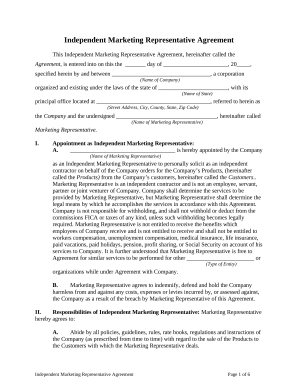
Handle Professional Contractor Agreement quickly online

Document management can overwhelm you when you can’t find all of the documents you need. Fortunately, with DocHub's substantial form collection, you can get everything you need and quickly manage it without the need of switching among applications. Get our Professional Contractor Agreement and start utilizing them.

The best way to manage our Professional Contractor Agreement using these basic steps:

  1. Examine Professional Contractor Agreement and choose the form you need.
  2. Preview the template and click Get Form.
  3. Wait for it to open in our online editor.
  4. Edit your template: include new information and pictures, and fillable fields or blackout certain parts if needed.
  5. Prepare your template, conserve changes, and prepare it for delivering.
  6. When all set, download your form or share it with your contributors.

Try out DocHub and browse our Professional Contractor Agreement category without trouble. Get a free account right now!


Video Guide on Professional Contractor Agreement management

video background

Commonly Asked Questions about Professional Contractor Agreement

Read below for tips on writing business contracts for your small business. Get It in Writing. Use Language You Can Understand. Be Detailed. Include Payment Details. Consider Confidentiality. Include Language on How to End the Contract. Consider State Laws Governing the Contract.
A professional services contract agreement is defined as a contract structure between a professional services firm or consultant and the client that dictates the expectations of each party. It dictates who bears risk, when money changes hands, and how the final project-based service is to be delivered.
To that end, before you sign anything and start working, make sure your contract has these 5 key elements. A Detailed Scope of Work. Project Cost and Payment Schedule. Construction Timeline. Change Order Process. Project Issues and Dispute Resolution.
A contract should contain everything agreed upon by you and your licensed contractor. It should detail the work, price, when payments will be made, who gets the necessary building permits, and when the job will be finished. The contract also must identify the contractor, and give their address and license number.
Here are what the Smith + Malek team has seen as the most common errors in construction contracts: Its not written down. Both parties havent signed the contract. Not all of the terms of the agreement are in writing and in the contract. The timeline is unclear. Particular terms arent defined.
What Should Be in a Construction Contract? Identifying/Contact Information. Title and Description of the Project. Projected Timeline and Completion Date. Cost Estimate and Payment Schedule. Stop-Work Clause and Stop-Payment Clause. Act of God Clause. Change Order Agreement. Warranty.
Elements of a construction contract Name of contractor and contact information. Name of homeowner and contact information. Describe property in legal terms. List attachments to the contract. The cost. Failure of homeowner to obtain financing. Description of the work and the completion date. Right to stop the project.
How to draft a contract between two parties: A step-by-step checklist Know your parties. Agree on the terms. Set clear boundaries. Spell out the consequences. Specify how you will resolve disputes. Cover confidentiality. Check the legality of the contract. Open it up to negotiation.