

Enhance your file operations with Production Requests Legal Forms

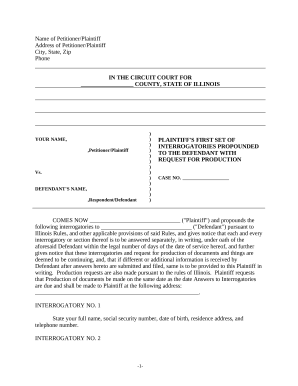
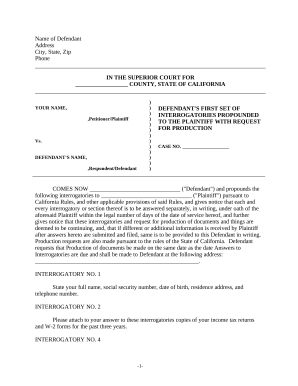
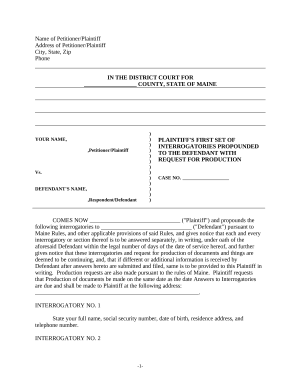
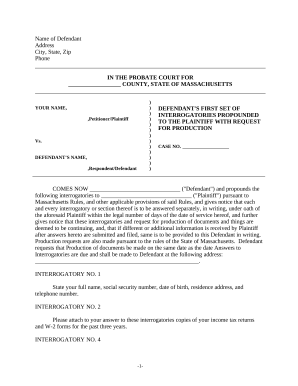
Your workflows always benefit when you can easily obtain all the forms and documents you will need at your fingertips. DocHub provides a a huge library of document templates to alleviate your daily pains. Get hold of Production Requests Legal Forms category and quickly browse for your form.

Start working with Production Requests Legal Forms in a few clicks:

  1. Gain access to Production Requests Legal Forms and get the form you need.
  2. Click Get Form to open it in the editor.
  3. Begin editing your document: add more fillable fields, highlight sentences, or blackout sensitive information and facts.
  4. The app saves your changes automatically, and once you are all set, you can download or distribute your form with other contributors.

Enjoy seamless form management with DocHub. Check out our Production Requests Legal Forms category and discover your form today!


Video Guide on Production Requests Legal Forms management

video background

Commonly Asked Questions about Production Requests Legal Forms

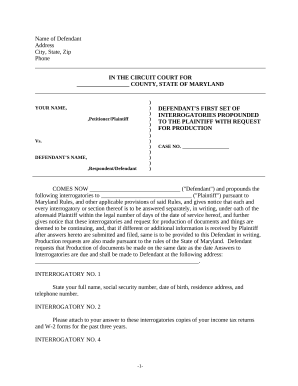
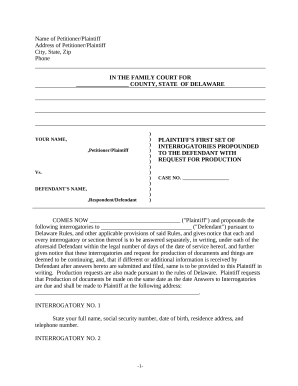
What is Production of Documents? A discovery notice to produce documents is a written notice from one party in a civil lawsuit requesting that the other party produce certain documents at trial.
Obtain Documents and Things from the Other Party Generally, a request for production asks the responding party to make available the original documents, but a requesting party may permit photocopies of the requested documents be sent instead, if inspection of the original document is not necessary.
General Principles. A Production Order is a judicial authorization that compels a person, including an organization, to disclose documents and records to an authorized peace officer. Compared to Search Warrants. A production order cannot be used to circumvent standard search warrant to invade privacy of an accused.
In a limited civil case (cases less than $25,000, or $35,000 if filed after Jan. 1, 2024) you may ask each party only 35 questions total, whether they are form interrogatories, special interrogatories, requests for admission, or requests for production.
Requests for production may be used to inspect and copy documents or tangible items held by another party. Although these requests are most commonly used to obtain copies of documents, they can also be used to test, measure, photograph, etc., any type of physical evidence in the other partys possession or control.
Any party may serve on any other party a request (1) to produce and permit the party making the request, or someone acting on the requestors behalf, to inspect and copy, any designated documents (including writings, drawings, graphs, charts, photographs, phonorecords, and other data compilations from which information
Bringing Documents to Examination and Trial However, the parties may agree that certain documents are not necessary at discovery or trial and can mutually decide not to produce them there.
