Get and handle Delaware Family Law online

Boost your file managing with our Delaware Family Law collection with ready-made document templates that meet your requirements. Access the form template, modify it, complete it, and share it with your contributors without breaking a sweat. Begin working more efficiently with your documents.

How to use our Delaware Family Law:

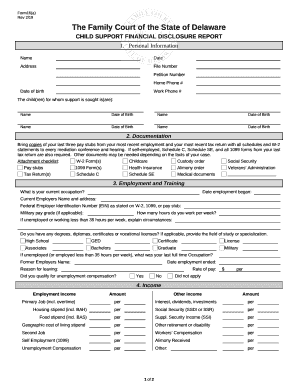
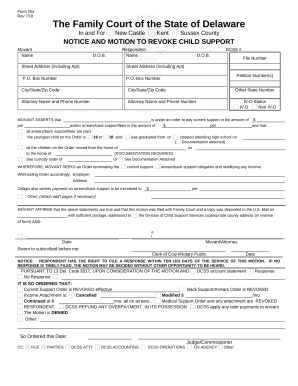
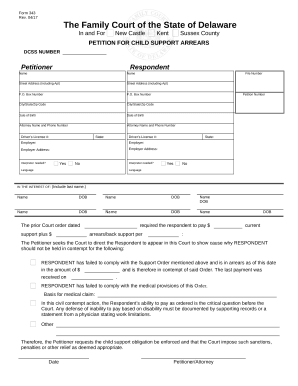
  1. Open our Delaware Family Law and find the form you require.
  2. Preview your document to ensure it’s what you want, and click Get Form to start working on it.
  3. Change, add new text, or highlight important information with DocHub features.
  4. Fill out your form and save the changes.
  5. Download or share your document with other people.

Examine all of the possibilities for your online file administration with our Delaware Family Law. Get a totally free DocHub account today!

Video Guide on Delaware Family Law management

video background

Commonly Asked Questions about Delaware Family Law

When determining custody, the Judge must consider what is in the. The childs relationships with parents, The childs adjustment to his or her. The mental and physical health of all. Both parents past and present. The criminal history of both parents and. Parents ability to communicate. Drug and alcohol history.
Under Delaware law, whether parents have joint legal custody or one parent has sole legal custody of a child, each parent has the right to receive, when requested from the other parent, all material information concerning the childs progress in school, medical treatment, school activities and conferences, religious
While there is no specific age determining when a Delaware judge will consider a childs physical custody preference, they will factor in the opinion of an older, more mature child. For example, a teenagers opinion holds more weight than a child under the age of 12.
Delaware is what is called an equitable distribution state. This means that marital property means all property acquired during the marriage (even if in just one spouses name) and will not automatically be split 50/50 in a divorce. Instead, the Court will decide what kind of split is equitable or fair.
In Delaware, parents can either have joint legal custody or one parent can have sole legal custody, which means the child primarily resides with that parent and has visitation with the other parent (13 Del. C. 727).
of the following childrens rights: The right to a continuing relationship with both parents. The right to be treated as an important human being, with unique feelings, ideas and desires. The right to continuing care and guidance from both parents.
If parents have joint custody, the custody order will state with which parent the child will live. The parents must talk and make joint decisions on the childs school, religion, and doctors.