
Create your Probate Legal Document from scratch

Start Building Now
Title decoration

Here's how it works

01. Start with a blank Probate Legal Document
Open the blank document in the editor, set the document view, and add extra pages if applicable.
02. Add and configure fillable fields
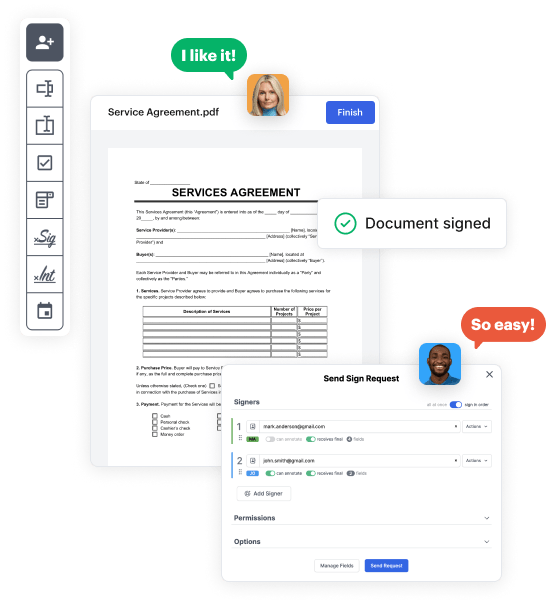
Use the top toolbar to insert fields like text and signature boxes, radio buttons, checkboxes, and more. Assign users to fields.
03. Distribute your form
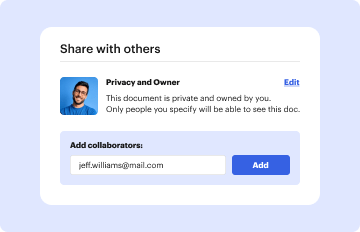
Share your Probate Legal Document in seconds via email or a link. You can also download it, export it, or print it out.

A detailed guide on how to design your Probate Legal Document online

Form edit decoration

Step 1: Start with DocHub's free trial.

Navigate to the DocHub website and register for the free trial. This gives you access to every feature you’ll require to create your Probate Legal Document without any upfront cost.

Step 2: Navigate to your dashboard.

Sign in to your DocHub account and navigate to the dashboard.

Step 3: Initiate a new document.

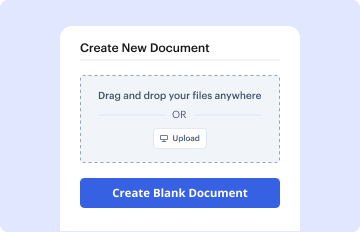
Click New Document in your dashboard, and choose Create Blank Document to create your Probate Legal Document from the ground up.

Step 4: Use editing tools.

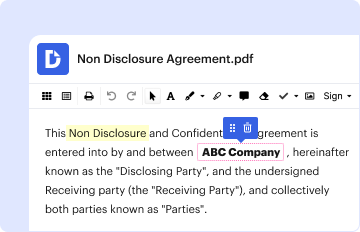
Place various elements such as text boxes, radio buttons, icons, signatures, etc. Organize these fields to suit the layout of your document and designate them to recipients if needed.

Step 5: Organize the form layout.

Rearrange your document quickly by adding, repositioning, removing, or combining pages with just a few clicks.

Step 6: Craft the Probate Legal Document template.

Convert your newly designed form into a template if you need to send multiple copies of the same document numerous times.

Step 7: Save, export, or distribute the form.

Send the form via email, distribute a public link, or even publish it online if you aim to collect responses from more recipients.


be ready to get more

Build your Probate Legal Document in minutes

Start creating now

Got questions?

We have answers to the most popular questions from our customers. If you can't find an answer to your question, please contact us.
Contact us
In your will, you should: State that the document is your will and reflects your final wishes. Name the people you want to inherit your property after you die. Choose someone to carry out the wishes in your will. Name guardians to care for your minor children or pets, if you have them.
An example of a simple will is: I give all my residences to my husband, Tex. If he does not survive me, I give that property to . This serves as a straightforward illustration of a basic will.
I, , a resident in the City of , County of , State of , being of sound mind, not acting under duress or undue influence, and fully understanding the nature and extent of all my property and of this disposition thereof, hereby make,
There are different types of wills you can choose from, including a simple will. Simple or basic wills let you spell out how you want your assets to be distributed among your beneficiaries once you pass away. You can also use this kind of will to name an executor and choose a guardian for minor children.
A will is a document that approves you to designate how your property and property are allotted upon your death. The easiest structure of a will is a holographic or handwritten will, which does not require witnesses or lawyers. A holographic will be written absolutely in the testators personal handwriting.
be ready to get more

Build your Probate Legal Document in minutes

Start creating now

Related Q&A to Probate Legal Document

A will does not have to be recorded to be valid while a person is living. The only time a will needs to be recorded is following the death of the person that created the will, at which point the Will may need to be filed with the Clerk to start the probate process.
A will. This is a legal document in which you name an executor to carry out your wishes, heirs to receive your assets and a guardian if you have minor children.
Create a title and intros. A straightforward yet important detail to start your will is with a title and introduction. Appoint an executor. Determine guardianship/care of dependents. Assign distribution of assets. List your beneficiaries. Specify funeral and burial instructions. Add residuary clauses. Sign and docHub.

Additional resources on building your forms