

Create your Foundation Contractor Legal Document from scratch

Start Building Now
Title decoration

Here's how it works

01. Start with a blank Foundation Contractor Legal Document
Open the blank document in the editor, set the document view, and add extra pages if applicable.
02. Add and configure fillable fields
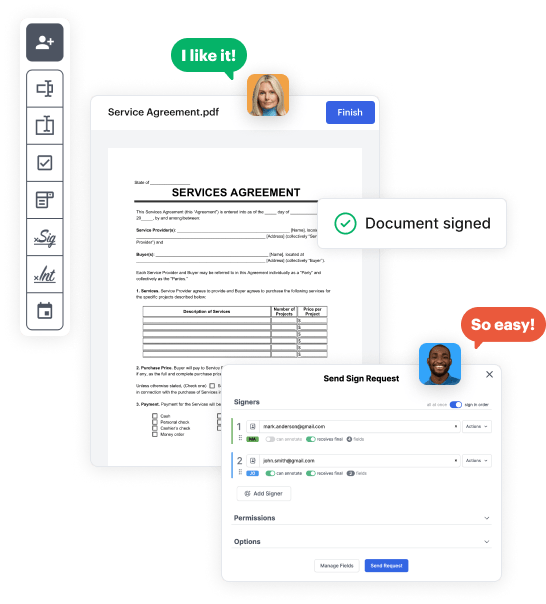
Use the top toolbar to insert fields like text and signature boxes, radio buttons, checkboxes, and more. Assign users to fields.
03. Distribute your form
Share your Foundation Contractor Legal Document in seconds via email or a link. You can also download it, export it, or print it out.

A brief guide on how to set up a professional-looking Foundation Contractor Legal Document

Form edit decoration

Step 1: Sign in to DocHub to begin creating your Foundation Contractor Legal Document.

First, sign in to your DocHub account. If you don't have one, you can easily sign up for free.

Step 2: Head to the dashboard.

Once you’re in, access your dashboard. This is your central hub for all document-focused operations.

Step 3: Initiate new document creation.

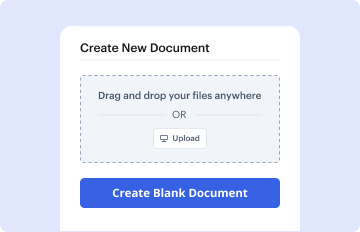
In your dashboard, select New Document in the upper left corner. Pick Create Blank Document to build the Foundation Contractor Legal Document from the ground up.

Step 4: Insert form elements.

Add various items like text boxes, photos, signature fields, and other interactive areas to your form and assign these fields to particular individuals as required.

Step 5: Customize your form.

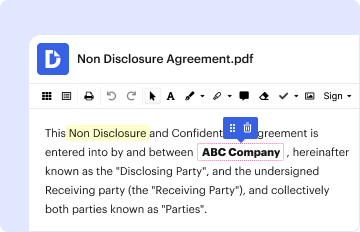
Personalize your document by inserting walkthroughs or any other required information leveraging the text feature.

Step 6: Review and tweak the form.

Carefully examine your created Foundation Contractor Legal Document for any mistakes or needed adjustments. Take advantage of DocHub's editing features to perfect your form.

Step 7: Share or download the form.

After finalizing, save your file. You can choose to retain it within DocHub, transfer it to various storage solutions, or send it via a link or email.


be ready to get more

Build your Foundation Contractor Legal Document in minutes

Start creating now

Got questions?

We have answers to the most popular questions from our customers. If you can't find an answer to your question, please contact us.
Contact us
Generally, to be legally valid, most contracts must contain two elements: All parties must agree about an offer made by one party and accepted by the other. Something of value must be exchanged for something else of value. This can include goods, cash, services, or a pledge to exchange these items.
How to write a contract agreement in 7 steps. Determine the type of contract required. Confirm the necessary parties. Choose someone to draft the contract. Write the contract with the proper formatting. Review the written contract with a lawyer. Send the contract agreement for review or revisions.
Elements of a construction contract Name of contractor and contact information. Name of homeowner and contact information. Describe property in legal terms. List attachments to the contract. The cost. Failure of homeowner to obtain financing. Description of the work and the completion date. Right to stop the project.
A contractor agreement should describe the scope of work, contract terms, contract duration, and the confidentiality agreement. It should also include a section for the two parties to sign and make the agreement official. If the contract doesnt meet these requirements, it may be inadmissible in a court of law.
The most common methods are: Construction Management at Risk: Separate suppliers manage the build and design, with a construction manager being hired by the builder to assist in the design phase. Integrated Project Delivery: The project is split between the owner, the construction manager, and the engineer or architect.
be ready to get more

Build your Foundation Contractor Legal Document in minutes

Start creating now

Related Q&A to Foundation Contractor Legal Document

Simply put, yes, you can write your own legal contract. You just need to be sure to include key components such as an offer, an acceptance, an exchange of value, and the willingness of both parties to enter into a contract. Legally binding contracts can be done both in writing or orally.
What Should Be in a Construction Contract? Identifying/Contact Information. Title and Description of the Project. Projected Timeline and Completion Date. Cost Estimate and Payment Schedule. Stop-Work Clause and Stop-Payment Clause. Act of God Clause. Change Order Agreement. Warranty.
This should include the scope of work to be performed, any confidentiality agreements, ownership of work, payment terms, payment schedule as well as any operational or legal parameters unique to your business.

Additional resources on building your forms


