
Create your Postnuptial Agreement Legal Form from scratch

Start Building Now
Title decoration

Here's how it works

01. Start with a blank Postnuptial Agreement Legal Form
Open the blank document in the editor, set the document view, and add extra pages if applicable.
02. Add and configure fillable fields
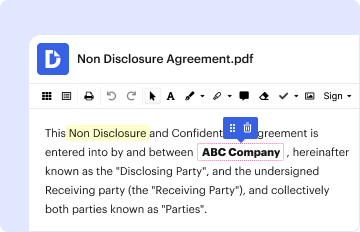
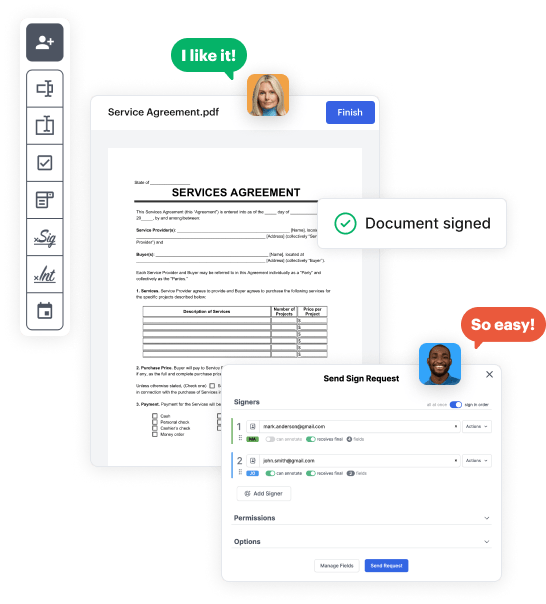
Use the top toolbar to insert fields like text and signature boxes, radio buttons, checkboxes, and more. Assign users to fields.
03. Distribute your form
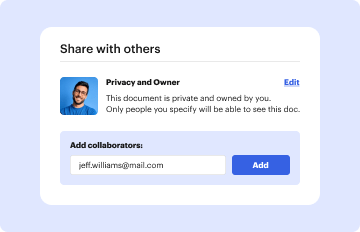
Share your Postnuptial Agreement Legal Form in seconds via email or a link. You can also download it, export it, or print it out.

Create Postnuptial Agreement Legal Form from scratch by following these step-by-step instructions

Form edit decoration

Step 1: Open DocHub and get going.

Begin by creating a free DocHub account using any offered sign-up method. Simply log in if you already have one.

Step 2: Register for a 30-day free trial.

Try out the entire suite of DocHub's advanced tools by signing up for a free 30-day trial of the Pro plan and proceed to build your Postnuptial Agreement Legal Form.

Step 3: Build a new blank form.

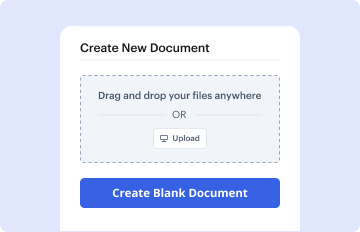
In your dashboard, click the New Document button > scroll down and choose to Create Blank Document. You’ll be redirected to the editor.

Step 4: Organize the document’s layout.

Use the Page Controls icon indicated by the arrow to switch between two page views and layouts for more flexibility.

Step 5: Begin by adding fields to create the dynamic Postnuptial Agreement Legal Form.

Explore the top toolbar to place document fields. Insert and arrange text boxes, the signature block (if applicable), embed images, etc.

Step 6: Prepare and configure the added fields.

Configure the fillable areas you added per your desired layout. Modify each field's size, font, and alignment to ensure the form is easy to use and polished.

Step 7: Finalize and share your form.

Save the completed copy in DocHub or in platforms like Google Drive or Dropbox, or create a new Postnuptial Agreement Legal Form. Send out your form via email or get a public link to reach more people.


be ready to get more

Build your Postnuptial Agreement Legal Form in minutes

Start creating now

Got questions?

We have answers to the most popular questions from our customers. If you can't find an answer to your question, please contact us.
Contact us
What Are the Requirements for a Postnuptial Agreement in New York? In writing. Signed by both parties. Signed before a notary public. Transparent. Both spouses must give full disclosure of their assets and debts.
Generally, a postnuptial agreement is for financial and property matters. It cannot be used to determine such things as child custody, visitation, or support.
Any concealment, deception, or fraud will likely result in the postnuptial agreement being invalidated in court. Family law courts must also believe that the agreement is fair. If a judge believes that the postnup is docHubly biased or unfair to one spouse, the document may not stand up in court.
A postnuptial agreement is void if it was not voluntarily and intentionally signed by both parties, or if one spouse was coerced or threatened into signing it. If one or both parties are under duress at the time of signing, the postnuptial agreement may be rendered invalid.
The average cost (i.e., legal fees) for a California lawyer to draft a postnuptial agreement is $970 [1] on a flat fee basis. The average cost for a California lawyer to review a postnuptial agreement is $480 [2] on a flat fee basis.
be ready to get more

Build your Postnuptial Agreement Legal Form in minutes

Start creating now

Related Q&A to Postnuptial Agreement Legal Form

You and your spouse can create your own postnuptial agreement, but having it drafted by a legal professional, such as a divorce lawyer, can help ensure its compliant with state laws. In fact, some states require that each party has its own legal counsel, to make sure both spouses fully understand their rights.
Postnuptial agreements will be seen as invalid if they do not have voluntary consent or were created under duress. They can only be enforceable if the court considers them valid. Even if deemed valid, a postnuptial agreement is not considered the final say on the matter of property division.

Additional resources on building your forms


