


Raise your production with Plaintiff Legal Forms

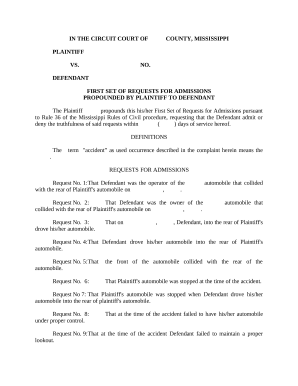
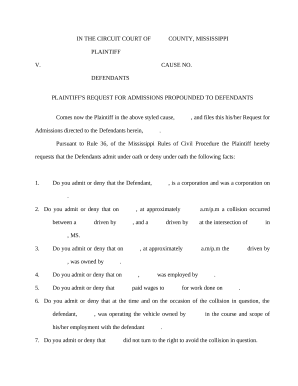
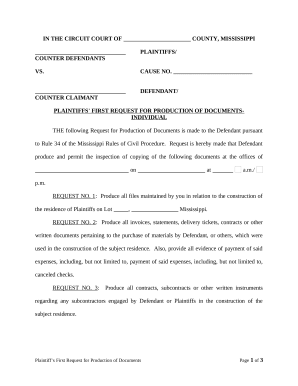
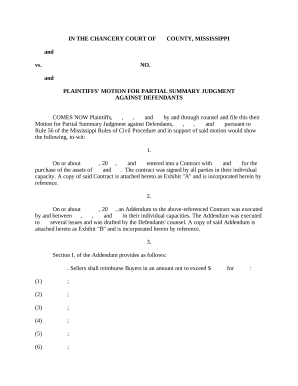
Form administration takes up to half of your business hours. With DocHub, it is simple to reclaim your time and effort and boost your team's productivity. Access Plaintiff Legal Forms collection and investigate all form templates relevant to your everyday workflows.

Easily use Plaintiff Legal Forms:

  1. Open Plaintiff Legal Forms and apply Preview to obtain the relevant form.
  2. Click on Get Form to begin working on it.
  3. Wait for your form to open in the online editor and begin modifying it.
  4. Add new fillable fields, symbols, and images, adjust pages, etc.
  5. Fill your template or prepare it for other contributors.
  6. Download or deliver the form by link, email attachment, or invite.

Speed up your everyday document administration with the Plaintiff Legal Forms. Get your free DocHub account right now to explore all forms.


Video Guide on Plaintiff Legal Forms management

video background

Commonly Asked Questions about Plaintiff Legal Forms

plaintiff - The person who files the complaint in a civil lawsuit. plea - In a criminal case, the defendants statement pleading guilty or not guilty in answer to the charges in open court.
Versus is used in case names to mean against. It is usually abbreviated as v. or vs. For example, in McDonald v.
PLAINTIFF - The Plaintiff is the person initiating a claim in a civil case. DEFENDANT - The Defendant is the person being sued in a civil case, or the person who has been charged with a crime/driving offense in a criminal case.
They begin when a plaintiff the party seeking relief from an alleged wrong files a complaint. The plaintiff can be an individual, organization, business, or governmental body. Allegations involve violations of civil laws and the Constitution, not criminal laws.
(In the trial court, the first name listed is the plaintiff, the party bringing the suit. The name following the v is the defendant. If the case is appealed, as in this example, the name of the petitioner (appellant) is usually listed first, and the name of the respondent (appellee) is listed second.
If youre referencing the plaintiff in your case, the Blue Book says to use Plaintiff. If youre referring to a plaintiff, or several plaintiffs, generally, or a plaintiff from a different case (such as one you are citing), the lower case plaintiff should be used (unless, of course, its the first word of a
plaintiff, the party who brings a legal action or in whose name it is broughtas opposed to the defendant, the party who is being sued. The term corresponds to petitioner in equity and civil law and to libelant in admiralty.
Information for Plaintiffs/Petitioners When you file a lawsuit, you will usually file a petition or a complaint. You also will almost always need a summons. And, in most civil cases, you will need a Civil Case Cover Sheet (Form CM-010).