Manage Plaintiff Discovery Interrogatories easily online

Document administration can stress you when you can’t discover all the documents you require. Fortunately, with DocHub's considerable form library, you can get all you need and easily manage it without changing among applications. Get our Plaintiff Discovery Interrogatories and begin utilizing them.

Using our Plaintiff Discovery Interrogatories using these easy steps:

  1. Browse Plaintiff Discovery Interrogatories and choose the form you require.
  2. Review the template and then click Get Form.
  3. Wait for it to open in the online editor.
  4. Edit your document: include new information and images, and fillable fields or blackout some parts if required.
  5. Fill out your document, preserve modifications, and prepare it for delivering.
  6. When you are ready, download your form or share it with other contributors.

Try out DocHub and browse our Plaintiff Discovery Interrogatories category without trouble. Get a free account right now!


Video Guide on Plaintiff Discovery Interrogatories management

video background

Commonly Asked Questions about Plaintiff Discovery Interrogatories

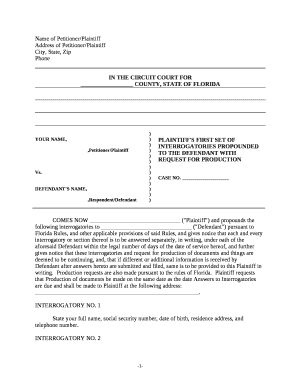
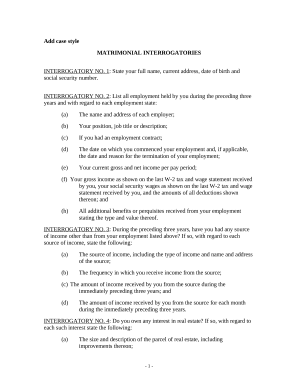
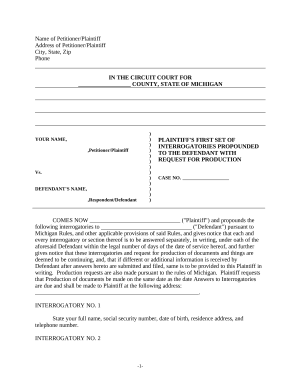
Interrogatories are a collection of written questions you can send to the opposing party in a lawsuit. The other party must then respond in writing while under oath. The number of interrogatory questions you can send is typically limited to 30 to 45 at a time.
Interrogatories are a discovery tool that the parties can use to have specific questions about a case answered before trial. Interrogatories are lists of questions sent to the other party that s/he must respond to in writing.
Interrogatories are a discovery tool that the parties can use to have specific questions about a case answered before trial. Interrogatories are lists of questions sent to the other party that s/he must respond to in writing. What are interrogatories and how are they used? - WomensLaw.org womenslaw.org laws trial what-are-inte womenslaw.org laws trial what-are-inte
Interrogatories allow the parties to ask who, what, when, where and why questions, making them a good method for obtaining new information in a case. There are two types of interrogatories: form interrogatories and special interrogatories.
Use Form Interrogatories when you want to gather information from the other side by having them answer questions from a list on a form, and swear under oath that the answers are true.
Your answers to the interrogatories should usually be short, clear, and direct and should answer only the question that is being asked. This is not the time to set out your entire case or defense to the other side. Take the time to make sure your answers are correct and truthful.
Interrogatories can also be used to obtain information about the parties involved in the dispute, the events that led up to the dispute, and what each party knows about the other partys position. Discovery is a process by which each party to a lawsuit collects evidence and information to support their case.
What happens if a plaintiff does not answer interrogatories? In the US, if a plaintiff does not answer interrogatories the defendant will file a motion to compel.