

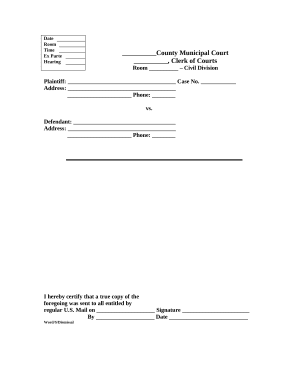


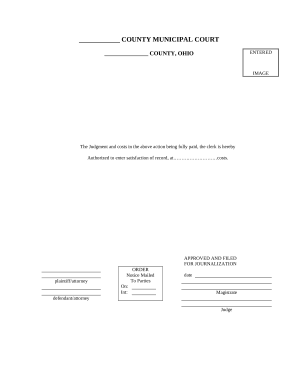
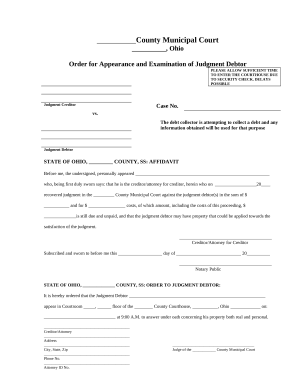
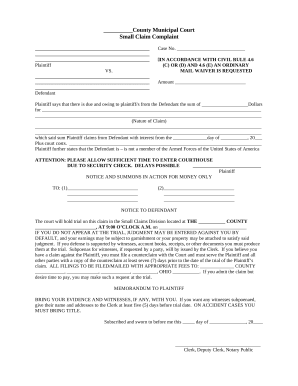
Enhance your production with Ohio Civil Procedure Forms
Papers management takes up to half of your business hours. With DocHub, it is simple to reclaim your time and effort and enhance your team's efficiency. Get Ohio Civil Procedure Forms category and check out all templates related to your everyday workflows.
Easily use Ohio Civil Procedure Forms:
- Open Ohio Civil Procedure Forms and use Preview to obtain the suitable form.
- Click Get Form to start working on it.
- Wait for your form to upload in our online editor and begin modifying it.
- Add new fillable fields, symbols, and images, modify pages order, etc.
- Fill out your form or set it for other contributors.
- Download or deliver the form by link, email attachment, or invite.
Improve your everyday file management with our Ohio Civil Procedure Forms. Get your free DocHub profile today to explore all templates.
Video Guide on Ohio Civil Procedure Forms management

Commonly Asked Questions about Ohio Civil Procedure Forms
What is the rule 7 in Ohio Civil Procedure?
Rule 7 - Pleadings and Motions (A) Pleadings. There shall be a complaint and an answer; a reply to a counterclaim denominated as such; an answer to a cross-claim, if the answer contains a cross-claim; a third-party complaint, if a person who was not an original party is summoned under the provisions of Civ.
What is the rule 30 in Ohio?
30. Each party at the deposition may examine the deponent without regard to which party served notice or called the deposition. In all other respects the examination and cross-examination of a deponent may proceed as they would at trial under the Ohio Rules of Evidence, except Evid.
How many days to respond to a motion to dismiss in Ohio?
If the court denies the motion to dismiss, the defendant(s) must serve their answer within 14 days after notice of the courts action (Ohio Civ. R. 12(A)).
What is the NCLEG Rule 65?
No restraining order or preliminary injunction shall issue except upon the giving of security by the applicant, in such sum as the judge deems proper, for the payment of such costs and damages as may be incurred or suffered by any party who is found to have been wrongfully enjoined or restrained.
What is the rule 65 injunctive relief?
The court may issue a preliminary injunction or a temporary restraining order only if the movant gives security in an amount that the court considers proper to pay the costs and damages sustained by any party found to have been wrongfully enjoined or restrained.
How long do you have to respond to a civil suit in Ohio?
You have 28 days from the date of service, unless that time period is extended by motion or agreement, to file an answer or other response to the complaint. An answer or other response to the complaint must be filed with the Clerk of Courts.
What is Rule 50 in Ohio Rules of Civil Procedure?
A party who moves for a directed verdict at the close of the evidence offered by an opponent may offer evidence in the event that the motion is not granted, without having reserved the right so to do and to the same extent as if the motion had not been made.
What is Civil Procedure 65 in Ohio?
A temporary restraining order may be granted without written or oral notice to the adverse party or his attorney only if (1) it clearly appears from specific facts shown by affidavit or by the verified complaint that immediate and irreparable injury, loss or damage will result to the applicant before the adverse party


