Boost your productiveness with NY Construction Contracts

Document administration consumes to half of your office hours. With DocHub, you can easily reclaim your time and effort and increase your team's efficiency. Get NY Construction Contracts online library and explore all form templates relevant to your everyday workflows.

Easily use NY Construction Contracts:

  1. Open NY Construction Contracts and employ Preview to obtain the suitable form.
  2. Click Get Form to start working on it.
  3. Wait for your form to open in our online editor and start editing it.
  4. Add new fillable fields, symbols, and pictures, adjust pages order, etc.
  5. Fill your form or set it for other contributors.
  6. Download or deliver the form by link, email attachment, or invite.

Accelerate your everyday file administration with our NY Construction Contracts. Get your free DocHub account today to discover all templates.


Video Guide on NY Construction Contracts management

video background

Commonly Asked Questions about NY Construction Contracts

To that end, before you sign anything and start working, make sure your contract has these 5 key elements. A Detailed Scope of Work. Project Cost and Payment Schedule. Construction Timeline. Change Order Process. Project Issues and Dispute Resolution.
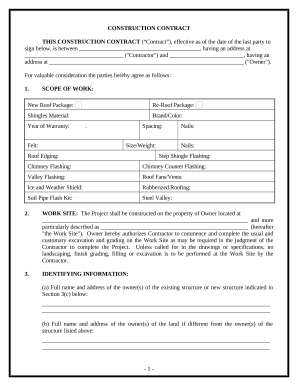
New York state law requires that consumers receive a written contract for home-improvement work that exceeds $500. The contract must contain: the contractors name, address and telephone number. the approximate start and completion date, including any contingencies that would change the completion date.
In New York, a contract is binding if there is offer and acceptance, consideration, an intent to be bound and mutual assent.
Heres whats required: Complete the basic license application. Create a login and apply for licensing. Provide sales tax ID number. Provide proof of residency. Provide proof of business address. Provide proof of workers compensation insurance. Provide proof of EPA certification (for businesses that apply)
Lump sum contracts, also called fixed price contracts, establish a fixed price for all of the materials and labor required to complete a job. This is the most basic and common type of construction contract.
The contract must contain: The contractors name, address and telephone number; The approximate start and completion dates, including any contingencies which would change the completion date;
Here are four main construction contracts to choose from, plus their pros and cons: Lump-Sum Contracts. Cost-Plus-Fee Contracts. Guaranteed Maximum Price Contracts. Unit-Price Contracts.