Boost your output with Northern District Bankruptcy Forms

Record management consumes to half of your business hours. With DocHub, you can easily reclaim your time and effort and improve your team's productivity. Access Northern District Bankruptcy Forms online library and investigate all document templates related to your everyday workflows.

Easily use Northern District Bankruptcy Forms:

  1. Open Northern District Bankruptcy Forms and employ Preview to find the appropriate form.
  2. Click on Get Form to start working on it.
  3. Wait for your form to upload in our online editor and start editing it.
  4. Add new fillable fields, symbols, and images, adjust pages order, and many more.
  5. Fill out your template or set it for other contributors.
  6. Download or share the form by link, email attachment, or invite.

Improve your everyday document management using our Northern District Bankruptcy Forms. Get your free DocHub account today to discover all templates.


Commonly Asked Questions about Northern District Bankruptcy Forms

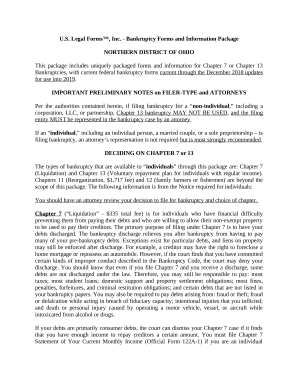
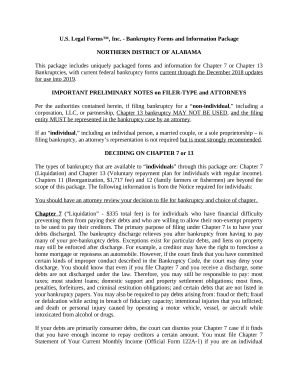
For creditors, bankruptcy offers a way to collect on debts they may otherwise write off. The United States Bankruptcy Code provides six types of bankruptcy: Chapter 7, 9, 11, 12, 13 and 15. Selecting the proper bankruptcy chapter is crucial for the success of a filing.
See how we rate products and services to help you make smart decisions with your money. The United States Bankruptcy Code has six chapters, though only three are commonly used. Chapter 7 and Chapter 13 are the most common filings for individuals, while Chapter 11 is usually for businesses.
If you decide to file a bankruptcy petition without a lawyer, you can get the forms from the Clerks Office of the U.S. Bankruptcy Court for the District of Columbia. It is located in Room 1225 of the E. Barrett Prettyman U.S. Courthouse at 333 Constitution Avenue, NW, Washington, DC 20001.
Chapter 11 can be done by almost any individual or business, with no specific debt-level limits and no required income. Chapter 13 is reserved for individuals with stable incomes, while also having specific debt limits.
If a Judgment Debtor intends to oppose a Bankruptcy Notice, the correct procedure is to file an Affidavit on An Application to Set Aside Bankruptcy Notice (Afidavit Atas Permohonan Membatalkan Notis Kebankrapan) pursuant to Rule 93 of the Insolvency Rules 2017.
Generally, Chapter 7 is more appropriate for simple cases while Chapter 13 for more complicated bankruptcies. Or somewhat more accurately, Chapter 13 can give you more power over and flexibility with certain kinds of creditors, and if you have non-exempt assets.
Background. A case filed under chapter 11 of the United States Bankruptcy Code is frequently referred to as a reorganization bankruptcy. Usually, the debtor remains in possession, has the powers and duties of a trustee, may continue to operate its business, and may, with court approval, borrow new money.
Honorable Karen K. Specie, Chief Judge | Traci E. Abrams, Clerk of Court.