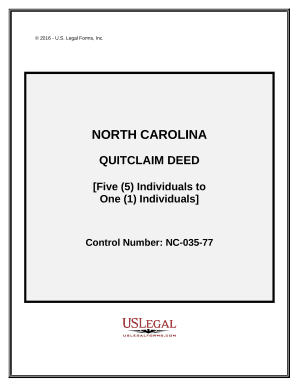
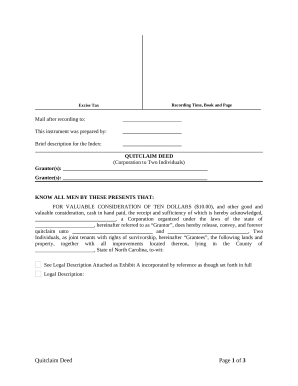
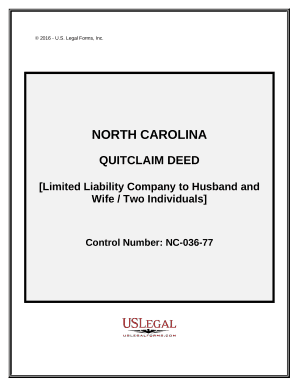
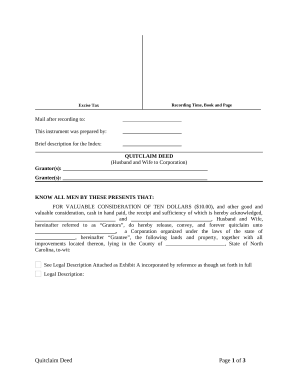
Supercharge your productiveness with North Carolina Quitclaims

Form management takes up to half of your business hours. With DocHub, it is possible to reclaim your time and improve your team's productivity. Access North Carolina Quitclaims category and explore all form templates related to your day-to-day workflows.

The best way to use North Carolina Quitclaims:

  1. Open North Carolina Quitclaims and utilize Preview to get the suitable form.
  2. Click Get Form to begin working on it.
  3. Wait for your form to upload in the online editor and begin editing it.
  4. Add new fillable fields, symbols, and pictures, modify pages order, etc.
  5. Fill your document or prepare it for other contributors.
  6. Download or deliver the form by link, email attachment, or invite.

Speed up your day-to-day file management with the North Carolina Quitclaims. Get your free DocHub profile right now to explore all forms.


Video Guide on North Carolina Quitclaims management

video background

Commonly Asked Questions about North Carolina Quitclaims

Quitclaim deeds are a particular type of deed used to facilitate the transfer of property ownership between close family members and spouses. It is one of the simplest methods for transferring property ownership. Quitclaim Deeds | Real Estate Attorney in North Carolina mathesonattys.com deeds quitclaim-deeds mathesonattys.com deeds quitclaim-deeds
A docHub disadvantage to a buyer receiving a quitclaim deed is the lack of warranties and guarantees about the propertys title. Unlike other types of deeds, a quitclaim deed does not assure that the grantor has a valid ownership interest in the property or that the property is free from liens or encumbrances.
Filing Fees While deeds of trust and mortgages cost $64 for the first 35 pages and $4 for each page after that, instruments other than deeds of trust and mortgages, including quitclaim deeds, typically cost $26 for the first 15 pages. North Carolina Quitclaim Deed Costs and Fees - Legal Templates legaltemplates.net form costs-and-fees legaltemplates.net form costs-and-fees
A quitclaim deed is most often used for transferring property between family members, or to add or remove a person to the title, or or to cure a simple defect on the title, such as a mistake in an address or the misspelling of a name. What Is A Quitclaim Deed? - Bankrate bankrate.com real-estate quitclaim-deed bankrate.com real-estate quitclaim-deed
Contrary to the way a special warranty deed works, a quitclaim deed offers the property on an as-is basis, offering little protection if any at all to the grantee (new owner).
Quitclaim deeds themselves are not directly reported to the IRS. However, the transfer of property using a quitclaim deed can have tax implications that may need to be reported, depending on the specifics of the transaction.
What are the Disadvantages of a Quit Claim Deed? No Protections For The Transaction: Unlike warranty deeds, a quitclaim deeds does not offer protections for the new property owner. There is no way to guarantee that the property is owned free and clear, and that there are no easements or restrictions.
Quitclaim deeds lack certain protections and promises found in other types of deed to real property. Because of this, they should only be used under certain circumstances. These include transferring real estate between close family membersfor instance, from a parent to a child. Top 5 Facts About Quitclaim Deeds - Investopedia investopedia.com articles personal-finance investopedia.com articles personal-finance
Quitclaim deeds lack certain protections and promises found in other types of deed to real property. Because of this, they should only be used under certain circumstances. These include transferring real estate between close family membersfor instance, from a parent to a child.
It can be used to release a nominal real estate interest as it can effectively transfer whatever interest the grantor has, regardless of its value. However, a quitclaim deed cannot be used to warrant that a title is valid since it does not guarantee the grantors ownership interest.