
Create your Minnesota Divorce Law from scratch

Start Building Now
Title decoration

Here's how it works

01. Start with a blank Minnesota Divorce Law
Open the blank document in the editor, set the document view, and add extra pages if applicable.
02. Add and configure fillable fields
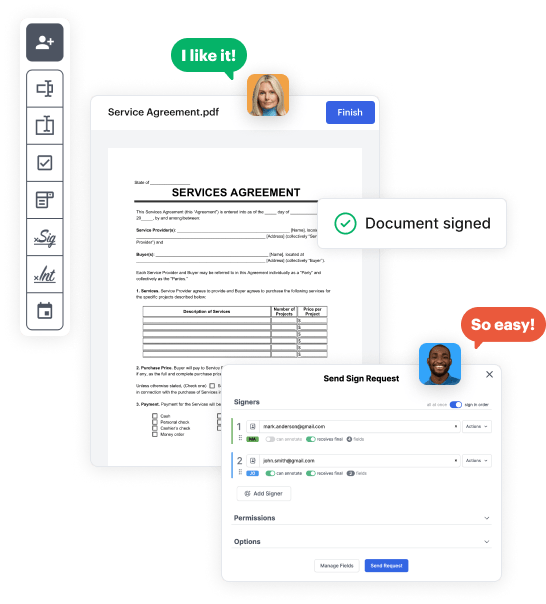
Use the top toolbar to insert fields like text and signature boxes, radio buttons, checkboxes, and more. Assign users to fields.
03. Distribute your form
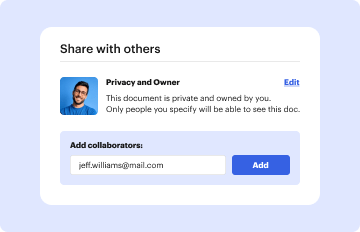
Share your Minnesota Divorce Law in seconds via email or a link. You can also download it, export it, or print it out.

Design your Minnesota Divorce Law in a matter of minutes

Form edit decoration

Step 1: Access DocHub to set up your Minnesota Divorce Law.

Begin by accessing your DocHub account. Explore the advanced DocHub functionality at no cost for 30 days.

Step 2: Navigate to the dashboard.

Once logged in, go to the DocHub dashboard. This is where you'll create your forms and manage your document workflow.

Step 3: Create the Minnesota Divorce Law.

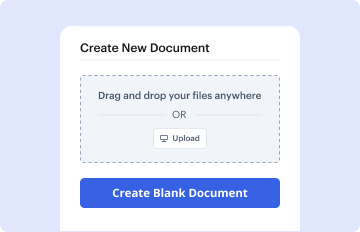
Hit New Document and select Create Blank Document to be redirected to the form builder.

Step 4: Set up the form layout.

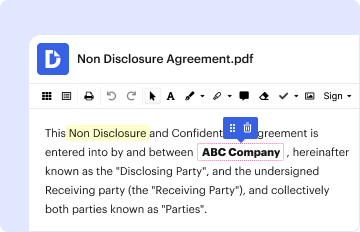
Use the DocHub toolset to insert and arrange form fields like text areas, signature boxes, images, and others to your document.

Step 5: Insert text and titles.

Include needed text, such as questions or instructions, using the text field to guide the users in your document.

Step 6: Customize field settings.

Alter the properties of each field, such as making them required or formatting them according to the data you plan to collect. Assign recipients if applicable.

Step 7: Review and save.

After you’ve managed to design the Minnesota Divorce Law, make a final review of your document. Then, save the form within DocHub, transfer it to your selected location, or share it via a link or email.


be ready to get more

Build your Minnesota Divorce Law in minutes

Start creating now

Got questions?

We have answers to the most popular questions from our customers. If you can't find an answer to your question, please contact us.
Contact us
There is no set number of years after which you become automatically entitled to half of all marital property in Minnesota. The court has broad discretion to divide assets equitably based on the facts of each case. That said, marriages lasting 20 years or longer often tend closer to an equal, 50/50 split of assets.
The judge decides who is responsible for the debts. For example, you may have to pay all or part of debts that are in your spouses name, or the judge could decide the debts should be paid equally by both of you. But remember: the divorce decree only affects the two of you, not the creditor.
Summary Dissolution to Get Divorced Quickly In Minnesota, the legal word for divorce is dissolution, and there are two types: regular and summary. Summary dissolution is a fast track to divorce, allowing you to finalize your divorce in as little as one month.
Is Minnesota a 50-50 state for divorce? In a 50-50 state for divorce, your assets are divided as fairly and equitably as possible, ing to a judges discretion. That means bank accounts, retirement accounts, retirement interests, and other assets gained during the marriage will be split as fairly as possible.
The court does not require you to have an attorney to get divorced in Minnesota. You are allowed to represent yourself, and if you do, you will be called a self-represented litigant. However, every person who appears in court without an attorney is expected to know and follow the law.
be ready to get more

Build your Minnesota Divorce Law in minutes

Start creating now

Related Q&A to Minnesota Divorce Law

In the United States married couples are allowed to end a marriage by filing for a divorce on the grounds of either fault or no fault. In the past, most states only granted divorces on fault grounds, but today all states have adopted the no fault divorce.
Equitable distribution of marital wealth Minnesota is an equitable distribution state. This does not necessarily mean a 50-50 settlement of everything. But the law presumes that all assets and debts acquired during the marriage will be divided equitably, including: Your house and other real estate.
In the marriage dissolution, the income, assets and debts accumulated during the marriage must be allocated between you and your spouse. The law is that you and your spouse are financial partners during the marriage and are presumed entitled to share in both the assets and income the partnership made.

Additional resources on building your forms


