

Create your Legal Waiver Document from scratch

Start Building Now
Title decoration

Here's how it works

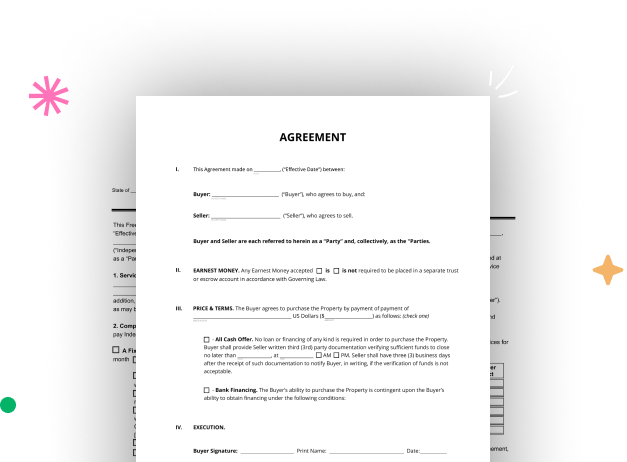
01. Start with a blank Legal Waiver Document
Open the blank document in the editor, set the document view, and add extra pages if applicable.
02. Add and configure fillable fields
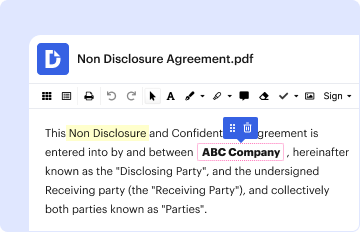
Use the top toolbar to insert fields like text and signature boxes, radio buttons, checkboxes, and more. Assign users to fields.
03. Distribute your form
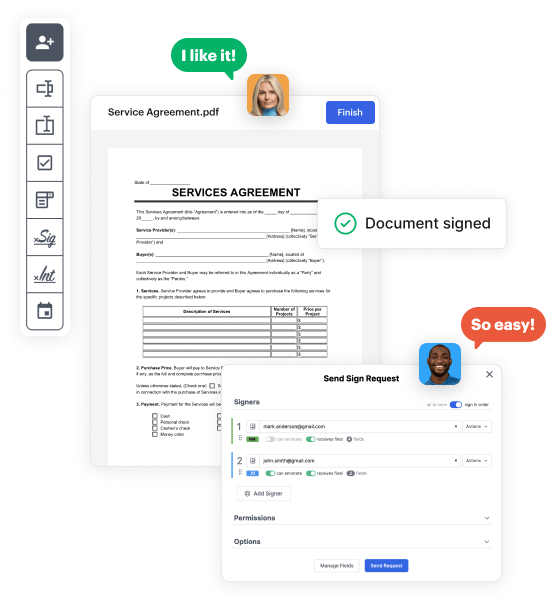
Share your Legal Waiver Document in seconds via email or a link. You can also download it, export it, or print it out.

A detailed guide on how to design your Legal Waiver Document online

Form edit decoration

Step 1: Start with DocHub's free trial.

Visit the DocHub website and register for the free trial. This provides access to every feature you’ll require to build your Legal Waiver Document without any upfront cost.

Step 2: Navigate to your dashboard.

Sign in to your DocHub account and go to the dashboard.

Step 3: Craft a new document.

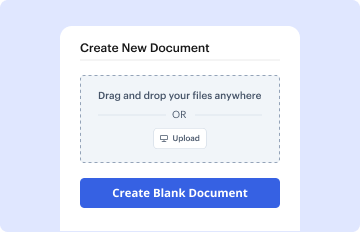
Click New Document in your dashboard, and select Create Blank Document to create your Legal Waiver Document from scratch.

Step 4: Use editing tools.

Insert different elements such as text boxes, radio buttons, icons, signatures, etc. Organize these elements to match the layout of your document and assign them to recipients if needed.

Step 5: Organize the form layout.

Organize your document quickly by adding, moving, deleting, or combining pages with just a few clicks.

Step 6: Create the Legal Waiver Document template.

Transform your newly crafted form into a template if you need to send multiple copies of the same document multiple times.

Step 7: Save, export, or share the form.

Send the form via email, share a public link, or even post it online if you aim to collect responses from more recipients.


be ready to get more

Build your Legal Waiver Document in minutes

Start creating now

Got questions?

We have answers to the most popular questions from our customers. If you can't find an answer to your question, please contact us.
Contact us
The liability waiver is a document that forbids you from suing the company in the case of negligence committed by the company. Most liability waivers go further than this, saying you are not allowed to sue them for even intentional acts that cause harm to your or other customers with you.
How to Write a Release of Liability Form Fill in the information of both parties, including each persons name and address. Include the details of the event. Add if there is a payment required by the releasee. Write a section for signatures, which will contain the names and dates of both parties.
While effective for legal protection, liability waivers arent foolproof. In cases of extreme negligence, intentional harm, or similar circumstances, these waivers will not hold up in court.
While most people do not read all of the fine print in these multi-page documents, ing to the New York Times, once you sign such a document, the contract is likely valid. Most liability waivers hold up in courts of law.
A liability waiver, or release of liability, is a legal document that a participant signs to waive their right to sue the organization in case of accidents or injuries. This type of waiver is commonly used in high-risk activities such as adventure sports or events where physical harm can occur.
be ready to get more

Build your Legal Waiver Document in minutes

Start creating now

Related Q&A to Legal Waiver Document

Since waivers are basic documents by nature, its entirely possible to use a word processor such as Google Forms or Microsoft Word to produce waiver forms.
Components of a waiver Get help. Writing a waiver should not be complicated. Use the correct structure. Waivers should be written in a certain structure. Proper formatting. Include a subject line. Include a caution! Talk about the activity risks. Do not forget an assumption of risk. Hold harmless.
A waiver does not automatically mean you lose your legal rights. Some waivers are not enforceable. Waivers may not excuse all types of negligence. For example, if your state does not recognize broad liability waivers, you may still be able to file a personal injury lawsuit.

Additional resources on building your forms