
Get and handle Legal Transfer of Property online

Boost your document managing with the Legal Transfer of Property online library with ready-made document templates that meet your needs. Get the form, change it, fill it, and share it with your contributors without breaking a sweat. Start working more efficiently with your documents.

How to use our Legal Transfer of Property:

  1. Open our Legal Transfer of Property and look for the form you need.
  2. Preview your form to ensure it’s what you want, and click Get Form to begin working on it.
  3. Edit, add new text, or highlight important information with DocHub features.
  4. Complete your form and save the changes.
  5. Download or share your document template with other people.

Discover all the opportunities for your online document administration using our Legal Transfer of Property. Get your free free DocHub account right now!


Video Guide on Legal Transfer of Property management

video background

Commonly Asked Questions about Legal Transfer of Property

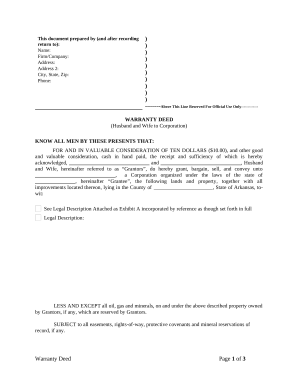
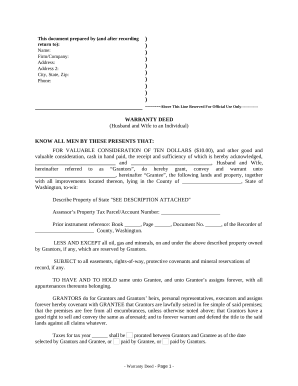
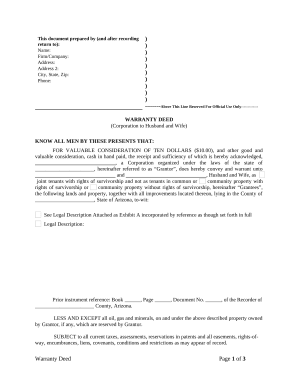
The most common way to transfer property is through a general warranty deed (sometimes called a grant deed). A general warranty deed guarantees good title from the beginning of time.
Voluntary alienation is an unforced transfer of title by sale or gift from an owner to another party. Involuntary alienation is a transfer of title without the owners consent.
A gift, in the law of property, is the voluntary and immediate transfer of property from one person (the donor or grantor) to another (the donee or grantee) without consideration.
The filing fee is generally $125 for residential and farm properties and $250 for all other properties. The county clerks office collects the RP-5217 filing fee. The county clerks office should be reviewing the RP-5217 forms for completeness, not for accuracy.
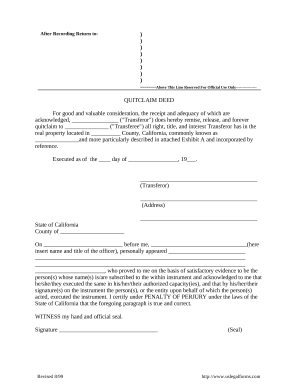
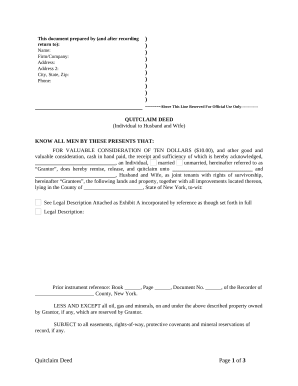
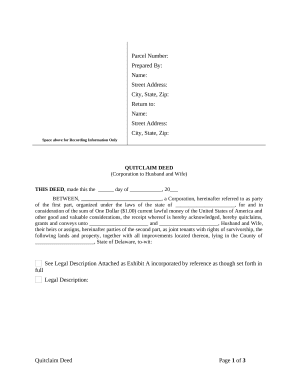
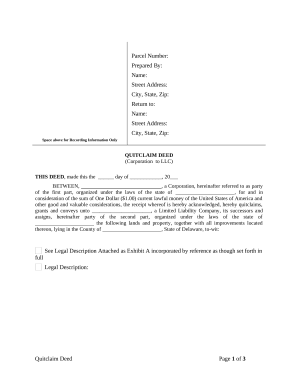
Common Methods of Property Transfer in California Grant Deeds. A Grant Deed is a crucial tool in California property transfers. Quitclaim Deeds. Quitclaim Deeds take a different approach to property transfers. Warranty Deeds. Warranty Deeds provide a robust layer of protection for property buyers.
Involuntary Alienation. Real estate can also be transferred by what is called involuntary alienation, which is a transfer of property without owner consent. This can happen when a person dies intestate (without a valid will), causing the courts to determine who receives the property.
To change a deed in New York City, you will need a deed signed and docHubd by the grantor. The deed must also be filed and recorded with the Office of the City Register. Transfer documents identifying if any taxes are due must also be filed and recorded with the City Register.
Situations of wrongful possession occur when property, such as stolen goods, is transferred without the permission of the owner.
