Handle Legal Rights of Way Documents easily online

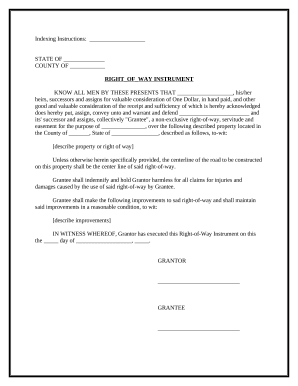
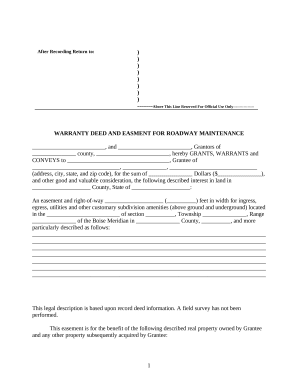
Document administration can stress you when you can’t discover all the forms you need. Luckily, with DocHub's considerable form library, you can get everything you need and promptly handle it without the need of changing between apps. Get our Legal Rights of Way Documents and begin utilizing them.

The best way to manage our Legal Rights of Way Documents using these basic steps:

  1. Check Legal Rights of Way Documents and choose the form you need.
  2. Review the template and click on Get Form.
  3. Wait for it to open in our online editor.
  4. Edit your template: add new information and images, and fillable fields or blackout certain parts if required.
  5. Complete your template, save alterations, and prepare it for delivering.
  6. When all set, download your form or share it with other contributors.

Try out DocHub and browse our Legal Rights of Way Documents category without trouble. Get your free account today!


Video Guide on Legal Rights of Way Documents management

video background

Commonly Asked Questions about Legal Rights of Way Documents

Right-of-way (ROW) Use Agreements are a form of value capture that involves the sale or lease of development above, below, or adjacent to transportation ROWs or real properties. 1. In active real estate markets, development rights are often transferred from historic properties to nearby properties.
Right of way is the right to pass over or through real property owned by someone else, usually based upon an easement; also, right-of-way. The right of way may specify the parameters of the easement or may be a general right to pass over or through, known as a floating easement.
With an easement, a landowner, without sharing profits, has the right to use and enjoy another landowners land. Easements are created either by a written contract or by implication in situations such as streets, parks, or alleyways.
The mission of the Office of Right of Way is to acquire real estate in a timely manner for transportation purposes and to manage or dispose of transportation property on terms beneficial to the people of the State of New York.
Adverse possession occurs when the servient estate owner, the landowner burdened with the easement, blocks the easement in a manner that is exclusive, open and notoriously hostile, preventing the dominant estate owner from using the easement for a continuous period of 10 years.
In most cases, property owners cannot block an easement as it is a legal right granted to another party. However, there may be specific circumstances where restrictions can be placed on the easements use.