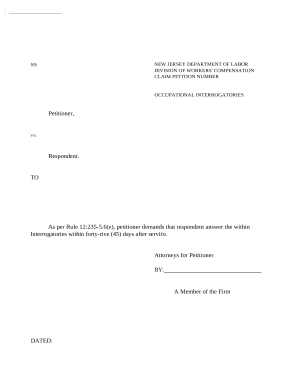
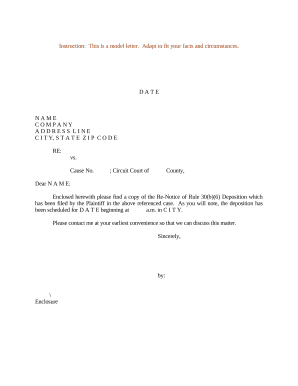
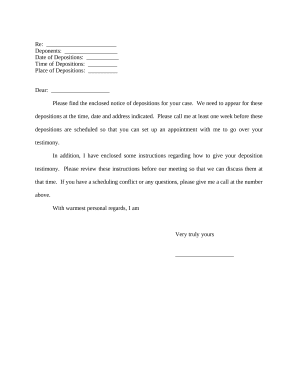
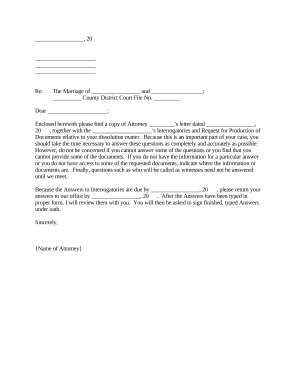
Supercharge your output with Legal Discovery Templates

Document administration takes up to half of your business hours. With DocHub, you can reclaim your time and enhance your team's productivity. Get Legal Discovery Templates collection and discover all form templates related to your everyday workflows.

Easily use Legal Discovery Templates:

  1. Open Legal Discovery Templates and use Preview to get the suitable form.
  2. Click on Get Form to start working on it.
  3. Wait for your form to upload in the online editor and start modifying it.
  4. Add new fillable fields, symbols, and pictures, adjust pages order, and many more.
  5. Fill out your form or prepare it for other contributors.
  6. Download or deliver the form by link, email attachment, or invite.

Speed up your everyday file administration using our Legal Discovery Templates. Get your free DocHub account right now to explore all forms.


Video Guide on Legal Discovery Templates management

video background

Commonly Asked Questions about Legal Discovery Templates

Discovery may involve the existence, description, nature, custody, condition and location of books, documents, electronically stored information or other tangible things, as well as the identity of the person or persons having knowledge of something that is discoverable. Even if something is arguably NOT discoverable
A discovery is recognizing something that already exists for the first time, that nobody has found before, e.g. how Christopher Columbus discovered the Americas.
If a lawsuit gets past its initial stages, the plaintiff and the defendant will go through a period of discovery. This involves asking the opposing party or other people to provide information that would not be publicly known or readily available to the party seeking it.
Discovery requests typically follow a common format that you can mirror. First, list instructions detailing the request for production. Be sure to mention Rule 34 and Rule 26(b), which outline the scope of the discovery request. Its also necessary to include a section with definitions.
Depositions are probably the most powerful discovery tool. Depositions, however, can be extremely expensive and are not always necessary or appropriate.
Best Practices When Organizing Legal Discovery Documents Consistent Naming Conventions. Use clear, consistent naming conventions for all your files. Use Folders and Subfolders. Create a well-structured folder system. Regular Backups. Access Controls and File Sharing. Use Document Management Software.
Write out each fact you wish the other party to admit is true. When writing these facts, be as clear and concise as possible. Each request must be for a single fact; do not include multiple facts, compound questions, or subparts.