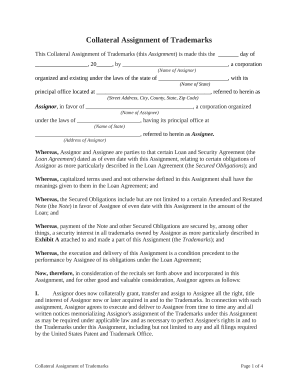
Get and manage Intellectual Property Legal Forms online

Speed up your file management with the Intellectual Property Legal Forms library with ready-made form templates that suit your requirements. Access your form, change it, complete it, and share it with your contributors without breaking a sweat. Start working more efficiently with the forms.

How to use our Intellectual Property Legal Forms:

  1. Open our Intellectual Property Legal Forms and search for the form you need.
  2. Preview your document to ensure it’s what you want, and click Get Form to start working on it.
  3. Change, include new text, or point out important information with DocHub features.
  4. Complete your form and save the modifications.
  5. Download or share your form template with other people.

Explore all of the possibilities for your online file management with our Intellectual Property Legal Forms. Get your free free DocHub profile right now!


Commonly Asked Questions about Intellectual Property Legal Forms

In accounting, intellectual property is considered an intangible asset, and, when possible, should be recorded as such on the balance sheet. Copyrights, trade marks and patents should be recorded on the balance sheet and other financial statements at or below, cost price.
It is a legal document stating the ownership or rights for intellectual property. The following are valid intellectual property documents: Trademark License. Proof of Patent.
The four main types of intellectual property are patents, trademarks, copyrights, and trade secrets.
There are four main types of intellectual property rights, including patents, trademarks, copyrights, and trade secrets.
A completed IP Disclosure form establishes what the invention is; who the inventors are; who is funding it; and what the anticipated product or market is. It initiates intellectual property due diligence.
Registration is not necessary or required but is strongly recommended for published or commercially-distributed works because it is a pre- requisite for the owner to pursue a legal action for copyright infringement.
IP is protected in law by, for example, patents, copyright and trademarks, which enable people to earn recognition or financial benefit from what they invent or create.
Here are five different ways to protect your intellectual property. Register copyrights, trademarks, and patents. Register business, product, or domain names. Create confidentiality, non-disclosure, or licensing contracts for employees and partners. Implement security measures. Avoid joint ownership. IP as a business asset. How to Protect Intellectual Property in 5 Different Ways - Copyrighted.com copyrighted.com blog protect-intellectua copyrighted.com blog protect-intellectua
A trademark license is a document that proves the registration of the trademark. A patent is a set a rights granted to the inventor of an invention. Proof of patent is a document that proves a patent is granted for the invention. A copyright is legal rights granted to the creator of an original work.
Writing intellectual property rights entails declaring ownership, detailing conditions of usage or licensing, and defining the IPs intended purpose. To make sure the provision complies with applicable regulations, it is essential to be specific and consult with legal professionals.