
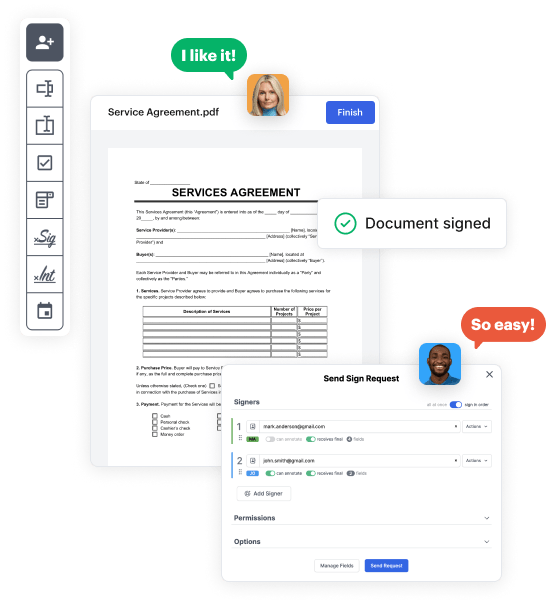
Create your Insurance Legal Form from scratch

Start Building Now
Title decoration

Here's how it works

01. Start with a blank Insurance Legal Form
Open the blank document in the editor, set the document view, and add extra pages if applicable.
02. Add and configure fillable fields
Use the top toolbar to insert fields like text and signature boxes, radio buttons, checkboxes, and more. Assign users to fields.
03. Distribute your form
Share your Insurance Legal Form in seconds via email or a link. You can also download it, export it, or print it out.

Design your Insurance Legal Form in a matter of minutes

Form edit decoration

Step 1: Access DocHub to set up your Insurance Legal Form.

Start by logging into your DocHub account. Utilize the pro DocHub functionality at no cost for 30 days.

Step 2: Go to the dashboard.

Once signed in, head to the DocHub dashboard. This is where you'll create your forms and manage your document workflow.

Step 3: Design the Insurance Legal Form.

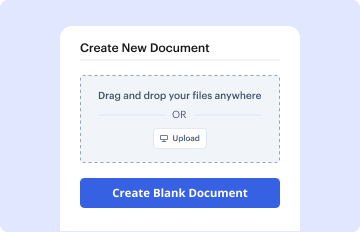
Hit New Document and choose Create Blank Document to be taken to the form builder.

Step 4: Set up the form layout.

Use the DocHub tools to add and arrange form fields like text areas, signature boxes, images, and others to your document.

Step 5: Insert text and titles.

Include necessary text, such as questions or instructions, using the text tool to lead the users in your document.

Step 6: Customize field properties.

Modify the properties of each field, such as making them mandatory or formatting them according to the data you expect to collect. Assign recipients if applicable.

Step 7: Review and save.

After you’ve managed to design the Insurance Legal Form, make a final review of your document. Then, save the form within DocHub, transfer it to your preferred location, or share it via a link or email.


be ready to get more

Build your Insurance Legal Form in minutes

Start creating now

Got questions?

We have answers to the most popular questions from our customers. If you can't find an answer to your question, please contact us.
Contact us
Definition: Proposal form is the most important and basic document required for life insurance contract between the insured and insurance company. It includes the insureds fundamental information like address, age, name, education, occupation etc. It also includes the persons medical history.
An insurance proposal is a document that provides critical personal information on the potential client so that the insurance underwriters can best provide the necessary coverage. An insurance policy is an actual contract that details the insurance coverage and the agreement between the insured and the insurer.
Effective August 1, 2023, all car insurance policies in NYS must include a Supplemental Spousal Liability Insurance, even if the insured is unmarried, unless the insured elects to decline in writing.
A proposal form is the form completed by the policyholder when applying for insurance. You will need to fill in information about the risk you are insuring e.g. the rebuild cost of your house or type of car you own.
You can make changes to your coverage any time throughout the year. Simply call your insurance agent. Policy changes usual take effect immediately.
be ready to get more

Build your Insurance Legal Form in minutes

Start creating now

Related Q&A to Insurance Legal Form

The proposer is the applicant, owner and payer of premiums under a policy. Whereas insured or life assured is the person whose life is covered. Thus, the proposer doesnt need to be insured under the policy purchased. For example: If you buy a policy in your name, you are the proposer and the insured.
A proposal form is a formal application document that an individual fills out when applying for an insurance policy. This form is used by insurance companies to gather detailed information about the prospective policyholder.
Steps to write a commercial insurance proposal: Key elements to include Step #1: Understand your clients business inside and out. Step #2: Highlight the risks and how you plan to mitigate them. Step #3: Outline your insurance products and how they work. Step #4: Personalize the benefits.

Additional resources on building your forms