

Create your Real Estate Ownership Transfer Deed from scratch

Start Building Now
Title decoration

Here's how it works

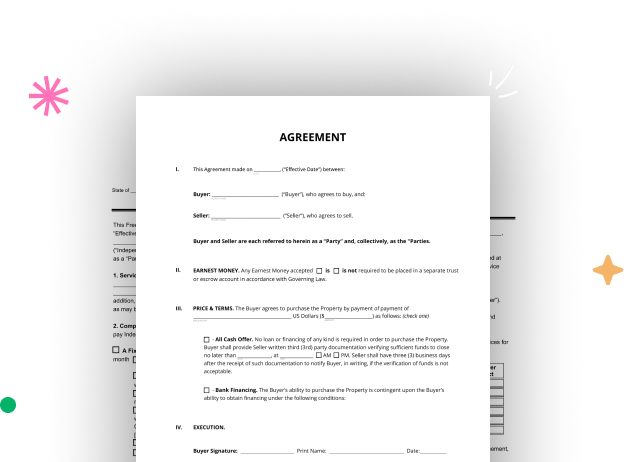
01. Start with a blank Real Estate Ownership Transfer Deed
Open the blank document in the editor, set the document view, and add extra pages if applicable.
02. Add and configure fillable fields
Use the top toolbar to insert fields like text and signature boxes, radio buttons, checkboxes, and more. Assign users to fields.
03. Distribute your form
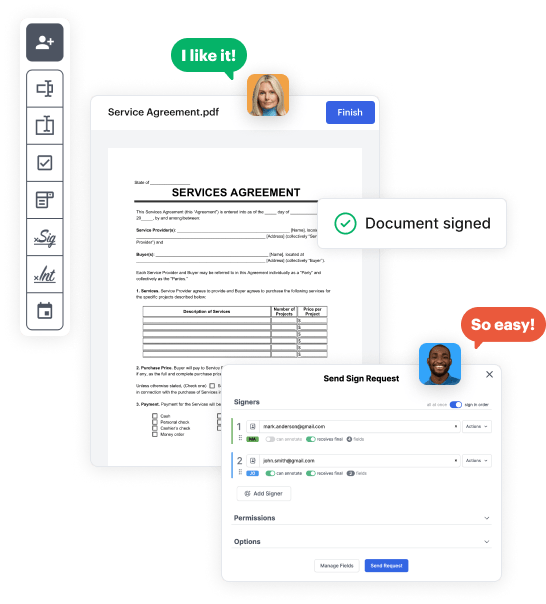
Share your Real Estate Ownership Transfer Deed in seconds via email or a link. You can also download it, export it, or print it out.

A detailed guide on how to design your Real Estate Ownership Transfer Deed online

Form edit decoration

Step 1: Start with DocHub's free trial.

Go to the DocHub website and sign up for the free trial. This gives you access to every feature you’ll need to create your Real Estate Ownership Transfer Deed without any upfront cost.

Step 2: Navigate to your dashboard.

Sign in to your DocHub account and navigate to the dashboard.

Step 3: Initiate a new document.

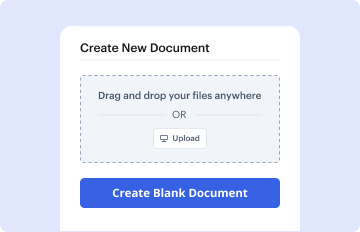
Hit New Document in your dashboard, and choose Create Blank Document to create your Real Estate Ownership Transfer Deed from the ground up.

Step 4: Use editing tools.

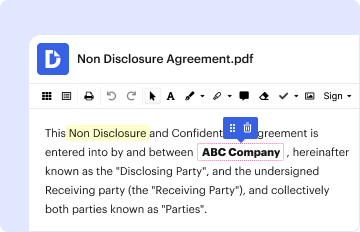
Insert various fields such as text boxes, radio buttons, icons, signatures, etc. Arrange these fields to match the layout of your form and assign them to recipients if needed.

Step 5: Modify the form layout.

Rearrange your form in seconds by adding, moving, deleting, or combining pages with just a few clicks.

Step 6: Set up the Real Estate Ownership Transfer Deed template.

Convert your newly crafted form into a template if you need to send many copies of the same document numerous times.

Step 7: Save, export, or distribute the form.

Send the form via email, distribute a public link, or even post it online if you wish to collect responses from more recipients.


be ready to get more

Build your Real Estate Ownership Transfer Deed in minutes

Start creating now

Got questions?

We have answers to the most popular questions from our customers. If you can't find an answer to your question, please contact us.
Contact us
You would have to record a new deed adding or removing the person(s) name. Because it is a legal document with legal consequences, we HIGHLY advise you work with an attorney to do so.
A deed for a house sometimes known as a property deed is a written document, typically drawn up by a real estate attorney, that moves property ownership from the seller (grantor) to the buyer (grantee).
If you need assistance in preparing a deed, you will need to contact an attorney. And once you have prepared your document, we would be happy to assist you with recording it in our office.
A: An unrecorded deed is still valid and should be recorded asap, as NYS is a race state meaning of two valid deeds, the first filed has priority even if the other was more recent. Upon the death of one joint tenant, the survivor automatically obtains full ownership.
The most common way to transfer property is through a general warranty deed (sometimes called a grant deed). A general warranty deed guarantees good title from the beginning of time.
be ready to get more

Build your Real Estate Ownership Transfer Deed in minutes

Start creating now

Related Q&A to Real Estate Ownership Transfer Deed

To change a deed in New York City, you will need a deed signed and docHubd by the grantor. The deed must also be filed and recorded with the Office of the City Register. Transfer documents identifying if any taxes are due must also be filed and recorded with the City Register.
Who Prepares the Deed in New York? The deed not only conveys title but also includes whatever warranties the seller is willing to make about the title to the property. In a typical real estate transaction, the deed is prepared by the seller, usually with the help of a title company or a real estate attorney.
The filing fee is generally $125 for residential and farm properties and $250 for all other properties. The county clerks office collects the RP-5217 filing fee. The county clerks office should be reviewing the RP-5217 forms for completeness, not for accuracy.

Additional resources on building your forms


