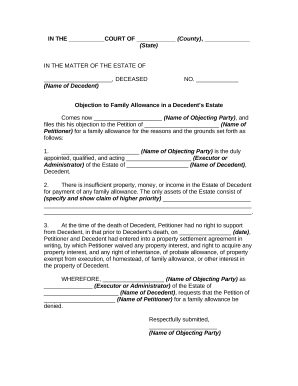
Improve your productivity with Inheritance Law Documents

Papers managing consumes to half of your business hours. With DocHub, it is simple to reclaim your office time and enhance your team's productivity. Access Inheritance Law Documents collection and investigate all form templates relevant to your daily workflows.

Easily use Inheritance Law Documents:

  1. Open Inheritance Law Documents and utilize Preview to obtain the suitable form.
  2. Click Get Form to begin working on it.
  3. Wait for your form to open in our online editor and begin editing it.
  4. Add new fillable fields, icons, and images, modify pages order, and many more.
  5. Fill out your form or prepare it for other contributors.
  6. Download or deliver the form by link, email attachment, or invite.

Improve your daily file managing using our Inheritance Law Documents. Get your free DocHub profile today to explore all forms.


Video Guide on Inheritance Law Documents management

video background

Commonly Asked Questions about Inheritance Law Documents

4 Documents Suze Orman Says You Need Will. A will is a legal document that, among other things, outlines where you want your assets to go after you die. Living Revocable Trust. Durable Power of Attorney for Healthcare. Advance Directive.
Common documents include a will, durable power of attorney for finances, and a living trust. Share this infographic to spread the word about getting your affairs in order. A will specifies how your estate your property, money, and other assets will be distributed and managed when you die.
Your Last Will and Testament. Many attorneys place a will at the top of their list of essential documents. Living Will/Healthcare Directive. Durable Power of Attorney (POA) Babysitter Authorization. Prenuptial Agreement.
What is the document for inheritance of property in the US? A will or testament is a legal document that expresses a persons (testator) wishes as to how their property (estate) is to be distributed after their death Form T-20 Affidavit of Inheritance.
In an emergency, its crucial to have a few essential legal estate documents readily accessible, such as a Last Will and Testament, Advance Healthcare Directive, Durable Power of Attorney (aka Financial Power of Attorney), and Living Will.
Vital records such as birth and death certificates, and certificates of marriage, divorce, citizenship, or adoption. Contact information for children, neighbors, other close family and friends, lawyers, financial advisors, and religious contacts.
A will. This is a legal document in which you name an executor to carry out your wishes, heirs to receive your assets and a guardian if you have minor children.