
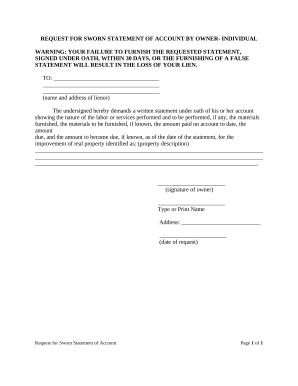
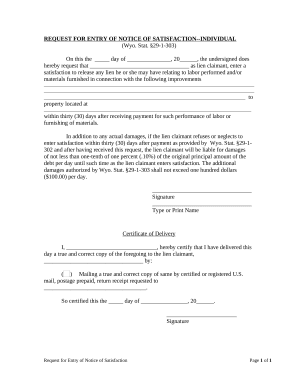
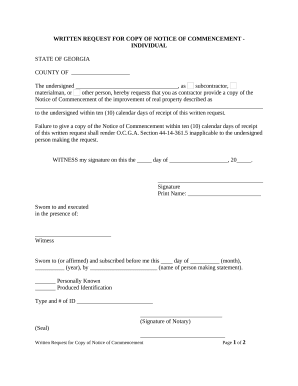
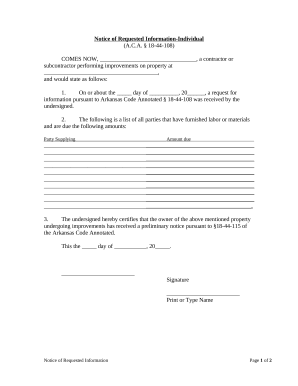
Get and handle Individual Legal Requests online

Boost your form administration using our Individual Legal Requests category with ready-made form templates that meet your requirements. Get the form, alter it, fill it, and share it with your contributors without breaking a sweat. Start working more effectively with the forms.

How to use our Individual Legal Requests:

  1. Open our Individual Legal Requests and find the form you want.
  2. Preview your document to ensure it’s what you want, and click Get Form to begin working on it.
  3. Modify, add new text, or highlight important information with DocHub tools.
  4. Complete your form and preserve the modifications.
  5. Download or share your document with other recipients.

Examine all the possibilities for your online file management with the Individual Legal Requests. Get your free free DocHub profile today!


Video Guide on Individual Legal Requests management

video background

Commonly Asked Questions about Individual Legal Requests

To inspect or obtain a record in Texas, youll need to contact the custodian tasked with it. Most agencies often have a department or office thats specifically assigned to process public record requests.
Texas Government Code, Chapter 552, gives you the right to access government records. All government information is presumed to be available to the public, although exceptions may apply to the disclosure of some information. Read more about the Public Information Act.
Cases from the Texas Supreme Court, Court of Criminal Appeals, and courts of appeals are searchable through the Texas Appeals Management and eFiling System (TAMES) Case Search. Files that are available online can be viewed for free. To access records that are not online, contact the specific court.
Notable examples of permissive exceptions include attorney-client communications, audit working papers, information relating to a specific pending negotiation or competitive situation, or information relating to anticipated or actual litigation.
Texas does not provide a database to search all criminal records statewide for free. However, you can select a county from the resources below and conduct one free search per day through the idocket.com service. Additional searches require a paid subscription.
Texas Government Code, Chapter 552, gives you the right to access government records; and an officer for public information and the officers agent may not ask why you want them. All government information is presumed to be available to the public.
All Federal court records are available online at PACER.gov, an electronic public access service that is overseen by the Administrative Office of the United States Courts. This includes all Federal civil court cases, criminal charges, as well as bankruptcies. In all, there are over 500 million documents on PACER.
The Public Information Act (PIA) provides a mechanism for citizens to inspect or copy government records. It also provides that governmental bodies may withhold government records from the public in specific instances.
