

Create your Indiana Rental Law from scratch

Start Building Now
Title decoration

Here's how it works

01. Start with a blank Indiana Rental Law
Open the blank document in the editor, set the document view, and add extra pages if applicable.
02. Add and configure fillable fields
Use the top toolbar to insert fields like text and signature boxes, radio buttons, checkboxes, and more. Assign users to fields.
03. Distribute your form
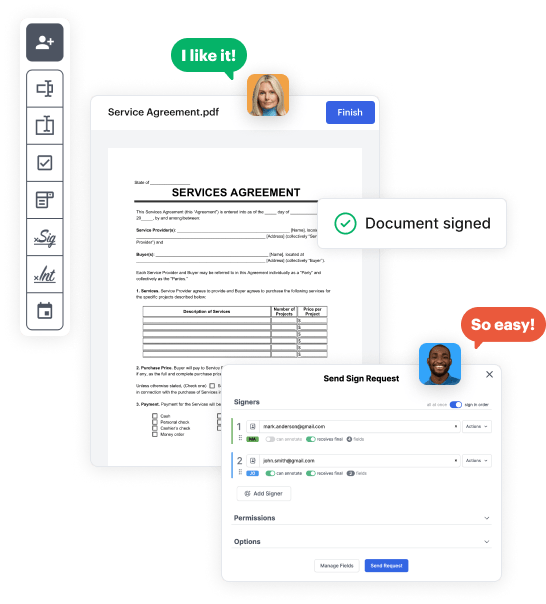
Share your Indiana Rental Law in seconds via email or a link. You can also download it, export it, or print it out.

A detailed walkthrough of how to craft your Indiana Rental Law online

Form edit decoration

Step 1: Start with DocHub's free trial.

Go to the DocHub website and register for the free trial. This gives you access to every feature you’ll require to build your Indiana Rental Law with no upfront cost.

Step 2: Access your dashboard.

Sign in to your DocHub account and go to the dashboard.

Step 3: Initiate a new document.

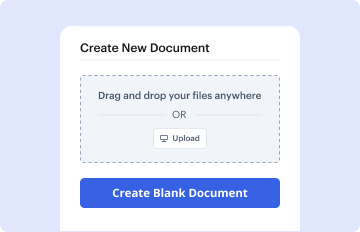
Hit New Document in your dashboard, and select Create Blank Document to create your Indiana Rental Law from the ground up.

Step 4: Utilize editing tools.

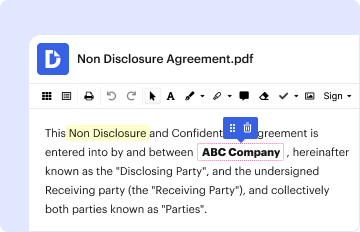
Add different fields such as text boxes, radio buttons, icons, signatures, etc. Arrange these fields to match the layout of your form and assign them to recipients if needed.

Step 5: Modify the form layout.

Rearrange your form easily by adding, moving, removing, or merging pages with just a few clicks.

Step 6: Set up the Indiana Rental Law template.

Transform your newly crafted form into a template if you need to send many copies of the same document repeatedly.

Step 7: Save, export, or distribute the form.

Send the form via email, distribute a public link, or even post it online if you wish to collect responses from a broader audience.


be ready to get more

Build your Indiana Rental Law in minutes

Start creating now

Got questions?

We have answers to the most popular questions from our customers. If you can't find an answer to your question, please contact us.
Contact us
You Have the Right to a Habitable Place to Live The rental unit must be clean, with toilets, furnaces and windows working. Locks must be on every outside door or doors that lead to a common area. Keeping rental premises habitable includes maintaining the structural safety of the building and weatherproofing.
(c) Except as authorized by judicial order, a landlord may not deny or interfere with a tenants access to or possession of the tenants dwelling unit by commission of any act, including the following: (1) Changing the locks or adding a device to exclude the tenant from the dwelling unit.
Does Indiana have rent control? Rent is not regulated in Indiana. This means that the only limit on how much a landlord in Indiana can charge for rent is what people are willing to pay. This is sometimes called a market rate.
In Indiana, landlords are generally not required to obtain a license statewide. However, some cities and counties have their own licensing requirements. For example, landlords in Indianapolis must obtain a landlord registration and inspection program permit.
In Indiana, there is no state-level rent control, allowing landlords to raise rent by any amount, provided they comply with lease agreements and give appropriate notice to tenants.
be ready to get more

Build your Indiana Rental Law in minutes

Start creating now

Related Q&A to Indiana Rental Law

Failing to Provide a Habitable Living Environment Among illegal landlord activities in Indiana is the failure to furnish a rental property that safeguards tenants health and safety. A common bond in every Indiana lease agreement is the implied warranty of habitability.
Limits on Rent Increases The lack of rent control in Indiana means tenants are vulnerable to sudden, dramatic rent hikes. Landlords can impose increases of 50%, 100%, or more if they believe they can get higher rents from new tenants. Long-term tenants on fixed incomes are hit the hardest by massive rent hikes.
Landlords cannot raise rent more than 10% total or 5% plus the percentage change in the cost of living whichever is lower over a 12-month period.

Additional resources on building your forms


