


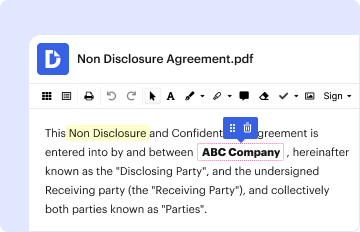


Create your Fiduciary Legal Form from scratch

Start Building Now
Title decoration

Here's how it works

01. Start with a blank Fiduciary Legal Form
Open the blank document in the editor, set the document view, and add extra pages if applicable.
02. Add and configure fillable fields
Use the top toolbar to insert fields like text and signature boxes, radio buttons, checkboxes, and more. Assign users to fields.
03. Distribute your form
Share your Fiduciary Legal Form in seconds via email or a link. You can also download it, export it, or print it out.

Create Fiduciary Legal Form from scratch with these detailed instructions

Form edit decoration

Step 1: Get started with DocHub.

Start by signing up for a free DocHub account using any offered sign-up method. Just log in if you already have one.

Step 2: Sign up for a free 30-day trial.

Try out the whole collection of DocHub's pro tools by signing up for a free 30-day trial of the Pro plan and proceed to build your Fiduciary Legal Form.

Step 3: Start with a new empty document.

In your dashboard, select the New Document button > scroll down and choose to Create Blank Document. You will be taken to the editor.

Step 4: Organize the document’s layout.

Use the Page Controls icon indicated by the arrow to switch between different page views and layouts for more flexibility.

Step 5: Start adding fields to design the dynamic Fiduciary Legal Form.

Explore the top toolbar to add document fields. Insert and arrange text boxes, the signature block (if applicable), insert images, etc.

Step 6: Prepare and customize the added fields.

Arrange the fillable areas you added based on your preferred layout. Personalize each field's size, font, and alignment to make sure the form is easy to use and polished.

Step 7: Finalize and share your document.

Save the finalized copy in DocHub or in platforms like Google Drive or Dropbox, or design a new Fiduciary Legal Form. Share your form via email or use a public link to engage with more people.


be ready to get more

Build your Fiduciary Legal Form in minutes

Start creating now

Got questions?

We have answers to the most popular questions from our customers. If you can't find an answer to your question, please contact us.
Contact us
Form 56-F should be filed instead of Form 56, Notice Concerning Fiduciary Relationship, by the federal agency acting as a fiduciary (defined below) in order to notify the IRS of the creation, termination, or change in status of a fiduciary relationship with a financial institution.
Fiduciaries have a special relationship with the parties they protect and are required to meet a high standard of care under the law. When they fail to fulfill their duties, an interested party may seek to remove and replace the fiduciary.
The most common fiduciary relationships involve legal or financial professionals who agree to act on behalf of their clients. A lawyer and a client have a fiduciary relationship. So do a trustee and a beneficiary, a corporate board and its shareholders, and an agent acting for a principal.
It is a document that notifies the IRS of the creation or termination of a fiduciary relationship under IRC section 6903 or provides notice of qualification under section 6036. IRC section 6903 outlines the responsibilities of fiduciaries when acting on behalf of another person in tax matters.
This form is typically filed when an individual becomes incapacitated, decides to delegate his or her tax responsibilities, or the individual dies. Form 56 differs from a Form 2848, Power of Attorney form which allows a representative to act on behalf of the individual.
be ready to get more

Build your Fiduciary Legal Form in minutes

Start creating now

Related Q&A to Fiduciary Legal Form

The fiduciary of a domestic decedents estate, trust, or bankruptcy estate files Form 1041 to report: The income, deductions, gains, losses, etc. of the estate or trust. The income that is either accumulated or held for future distribution or distributed currently to the beneficiaries.
A fiduciary is someone who manages money or property for someone else. When youre named a fiduciary and accept the role, you must by law manage the persons money and property for their benefit, not yours.
A Fiduciary File is just that. A file, or more likely a digital folder, that holds all the relevant plan-related documents and governance-related files that define roles, set criteria, document benefits, and demonstrate procedural prudence.

Additional resources on building your forms


