


Create your Rhode Island Estate Planning from scratch

Start Building Now
Title decoration

Here's how it works

01. Start with a blank Rhode Island Estate Planning
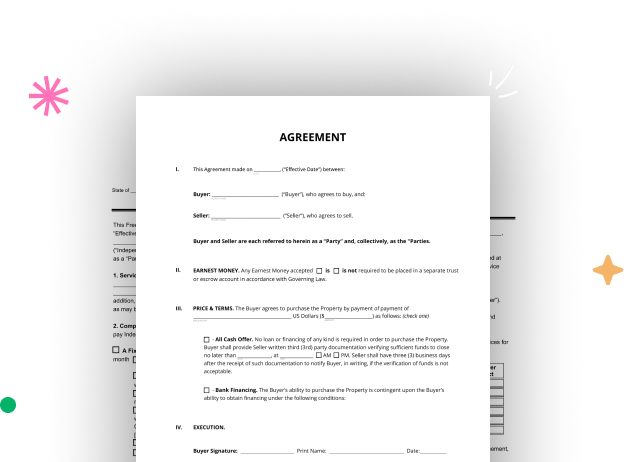
Open the blank document in the editor, set the document view, and add extra pages if applicable.
02. Add and configure fillable fields
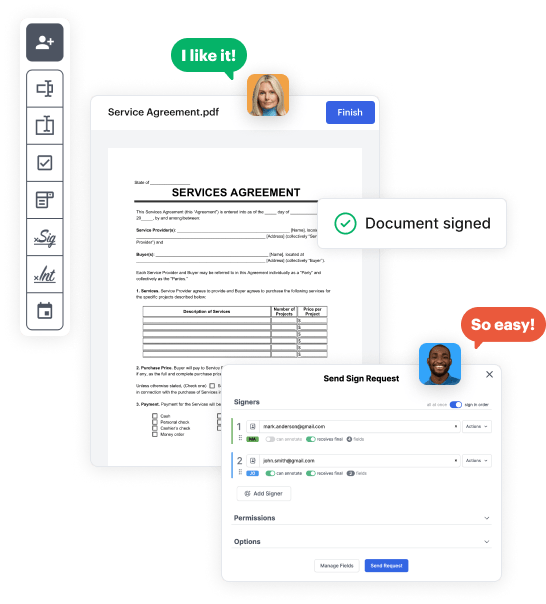
Use the top toolbar to insert fields like text and signature boxes, radio buttons, checkboxes, and more. Assign users to fields.
03. Distribute your form
Share your Rhode Island Estate Planning in seconds via email or a link. You can also download it, export it, or print it out.

A brief tutorial on how to build a polished Rhode Island Estate Planning

Form edit decoration

Step 1: Sign in to DocHub to create your Rhode Island Estate Planning.

First, sign in to your DocHub account. If you don't have one, you can easily sign up for free.

Step 2: Go to the dashboard.

Once you’re in, access your dashboard. This is your central hub for all document-centric operations.

Step 3: Kick off new document creation.

In your dashboard, choose New Document in the upper left corner. Choose Create Blank Document to craft the Rhode Island Estate Planning from scratch.

Step 4: Incorporate template fillable areas.

Add different fields like text boxes, photos, signature fields, and other options to your template and assign these fields to specific recipients as required.

Step 5: Fine-tune your form.

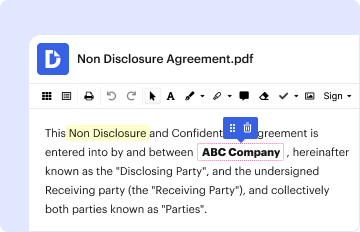
Refine your form by inserting walkthroughs or any other essential information using the text tool.

Step 6: Double-check and tweak the document.

Thoroughly check your created Rhode Island Estate Planning for any discrepancies or required adjustments. Make use of DocHub's editing capabilities to fine-tune your form.

Step 7: Send out or export the form.

After finalizing, save your work. You can choose to save it within DocHub, transfer it to various storage services, or send it via a link or email.


be ready to get more

Build your Rhode Island Estate Planning in minutes

Start creating now

Got questions?

We have answers to the most popular questions from our customers. If you can't find an answer to your question, please contact us.
Contact us
There isnt one universal answer to the question of how to organize your estate planning documents, but in general, keep wills, trust documents, powers of attorney, and other estate planning documents in the same place. You might consider keeping everything in a fireproof metal box or file cabinet, or with your lawyer.
5 Steps to Organize Estate Documents for Your Executor 5 Steps to Organize. Step 1: Create a checklist of important documents (and their locations) Step 2: List the names and contact information of key associates. Step 3: Catalog your digital asset inventory. Step 4: Ensure all documents are organized and accessible.
If youre going to create an electronic file, its key to stay organized. Make sure each file is clearly named. If you have a large number of files, it may be a good idea to sort types of files into individual folders within one main folder and have a short document that explains how to navigate your system.
Get a head-start on planning and follow these 7 easy steps: Take Inventory of Your Estate. First, narrow down what belongs to you. Set a Will in Place. Form a Trust. Consider Your Healthcare Options. Opt for Life Insurance. Store All Important Documents in One Place. Hire an Attorney from Angermeier Rogers.
Handwritten Will: A holographic will is a will written in the testators handwriting and signed by them without any witnesses. This is not valid in Rhode Island, with exceptions for military service members in active service.
be ready to get more

Build your Rhode Island Estate Planning in minutes

Start creating now

Related Q&A to Rhode Island Estate Planning

No, in Rhode Island, you do not need to docHub your will to make it legal. However, Rhode Island allows you to make your will self-proving and youll need to go to a notary if you want to do that.
Its a provision in the trust that grants a beneficiary the annual power to withdraw the greater of $5,000 or 5% of the trusts assets, while avoiding certain negative tax consequences (which are beyond the scope of this post) that might otherwise be applicable if the withdrawal right were exercised outside of those


