
Create your Employment Law from scratch

Start Building Now
Title decoration

Here's how it works

01. Start with a blank Employment Law
Open the blank document in the editor, set the document view, and add extra pages if applicable.
02. Add and configure fillable fields
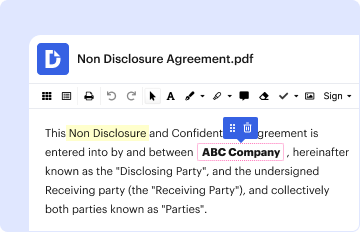
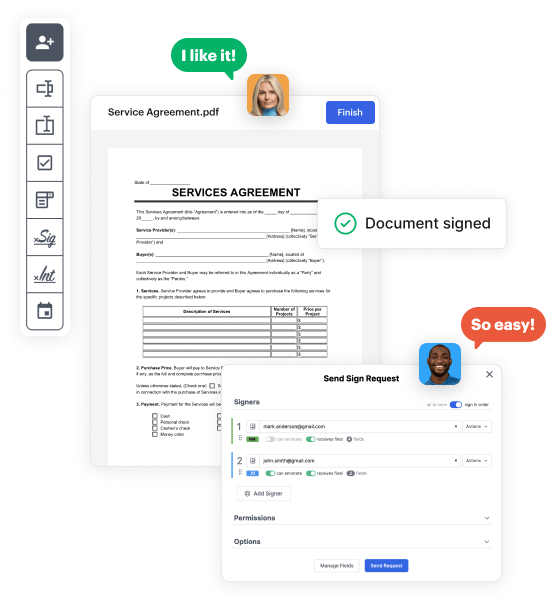
Use the top toolbar to insert fields like text and signature boxes, radio buttons, checkboxes, and more. Assign users to fields.
03. Distribute your form
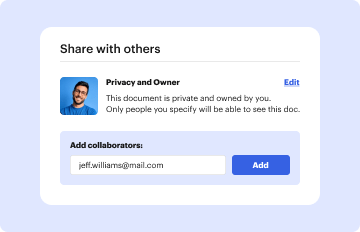
Share your Employment Law in seconds via email or a link. You can also download it, export it, or print it out.

A simple tutorial on how to create a professional-looking Employment Law

Form edit decoration

Step 1: Log in to DocHub to begin creating your Employment Law.

First, log in to your DocHub account. If you don't have one, you can simply sign up for free.

Step 2: Go to the dashboard.

Once you’re in, head to your dashboard. This is your central hub for all document-based activities.

Step 3: Start new document creation.

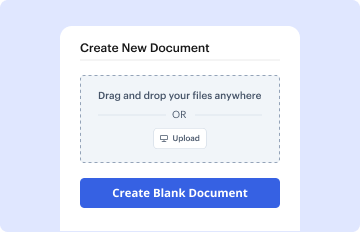
In your dashboard, choose New Document in the upper left corner. Hit Create Blank Document to put together the Employment Law from a blank slate.

Step 4: Incorporate form elements.

Place numerous elements like text boxes, images, signature fields, and other fields to your form and designate these fields to specific users as required.

Step 5: Adjust your document.

Refine your document by incorporating instructions or any other crucial information using the text option.

Step 6: Go over and adjust the form.

Carefully examine your created Employment Law for any discrepancies or required adjustments. Utilize DocHub's editing capabilities to perfect your document.

Step 7: Send out or export the document.

After finalizing, save your work. You may opt to keep it within DocHub, export it to various storage platforms, or send it via a link or email.


be ready to get more

Build your Employment Law in minutes

Start creating now

Got questions?

We have answers to the most popular questions from our customers. If you can't find an answer to your question, please contact us.
Contact us
DOLs rule would extend overtime pay guarantees to workers making just under $44,000, up from the $35,568 cutoff set in 2019. The threshold would jump to $58,656 at the beginning of 2025.
In the non-hospitality industry, employers must pay a minimum of 4 hours or the scheduled shift hours, whichever is less, at the standard minimum wage when requesting an employee to report for work, regardless of actual work performed.
The 7-minute rule in NY is a guideline for employers on how to round work hours, applying when time is tracked in 15-minute increments. ing to the Fair Labor Standards Act (FLSA), this rule allows employers to round down employee time to the nearest quarter-hour if the work time is between 1 and 7 minutes. Minimum Wage in New York: All You Need to Know in 2024 - Chowbus Chowbus blog article minimum-wa Chowbus blog article minimum-wa
Overview of Law New York requires that employers provide employees meal periods as follows: Employees are entitled to a 30-minute break between 11 a.m. and 2 p.m. for shifts that cover that time span and are more than 6 consecutive hours. Breaks and Rest Periods in New York | Complete Payroll Complete Payroll labor-law-library b Complete Payroll labor-law-library b
Effective June 19, 2024, the Labor Law will be amended to require paid 30-minute breaks each time an employee has a reasonable need to express breast milk. If an employee requires more than 30 minutes, employers must permit the employee to use existing paid break time or meal periods to do so.
be ready to get more

Build your Employment Law in minutes

Start creating now

Related Q&A to Employment Law

Work any number of hours in a day: New York employers are not restricted in the number of hours they require employees to work each day. This means that an employer may legally ask an individual to work shifts of 8, 10, 12 or more hours each day. Maximum Mandatory Weekly Work Hours in NY Hepworth Gershbaum Roth PLLC maximum-mandatory-we Hepworth Gershbaum Roth PLLC maximum-mandatory-we
An employee will be owed a spread of hours payment if the start of the first shift and end of the second shift is 10 hours or more, even if the employee is not working for 10 hours.

Additional resources on building your forms