Create your Domestic Violence Legal Form from scratch

Start Building Now
Title decoration

Here's how it works

01. Start with a blank Domestic Violence Legal Form
Open the blank document in the editor, set the document view, and add extra pages if applicable.
02. Add and configure fillable fields
Use the top toolbar to insert fields like text and signature boxes, radio buttons, checkboxes, and more. Assign users to fields.
03. Distribute your form
Share your Domestic Violence Legal Form in seconds via email or a link. You can also download it, export it, or print it out.

Build Domestic Violence Legal Form from scratch by following these detailed instructions
Form edit decoration

Step 1: Open DocHub and get going.

Begin by registering a free DocHub account using any offered sign-up method. Simply log in if you already have one.

Step 2: Sign up for a 30-day free trial.

Try out the whole collection of DocHub's pro tools by registering for a free 30-day trial of the Pro plan and proceed to build your Domestic Violence Legal Form.

Step 3: Create a new blank form.

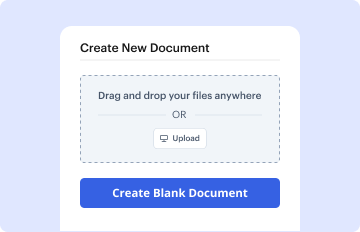
In your dashboard, select the New Document button > scroll down and hit Create Blank Document. You will be taken to the editor.

Step 4: Organize the document’s layout.

Utilize the Page Controls icon indicated by the arrow to toggle between two page views and layouts for more convenience.

Step 5: Begin by inserting fields to design the dynamic Domestic Violence Legal Form.

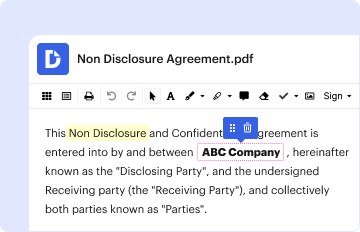
Explore the top toolbar to place document fields. Add and format text boxes, the signature block (if applicable), insert images, etc.

Step 6: Prepare and configure the incorporated fields.

Organize the fillable areas you incorporated based on your chosen layout. Adjust the size, font, and alignment to make sure the form is user-friendly and neat-looking.

Step 7: Finalize and share your document.

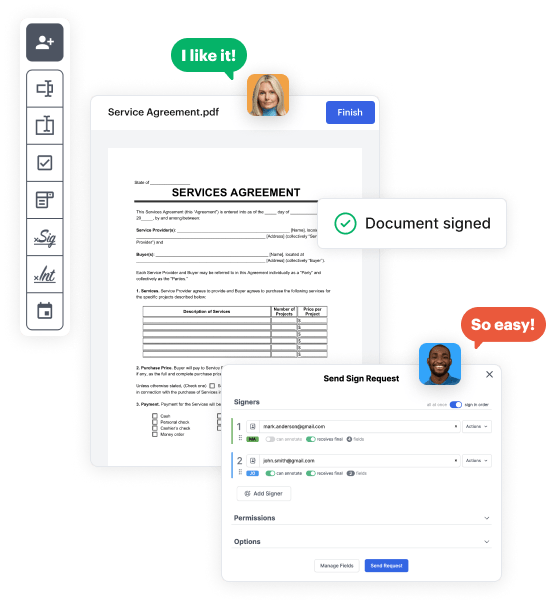
Save the finalized copy in DocHub or in platforms like Google Drive or Dropbox, or craft a new Domestic Violence Legal Form. Send out your form via email or get a public link to reach more people.


be ready to get more

Build your Domestic Violence Legal Form in minutes

Start creating now

Got questions?

We have answers to the most popular questions from our customers. If you can't find an answer to your question, please contact us.
Contact us
1) Stay away: The court can order the respondent to stay away from you, your home, your job, your children, your childrens school or any other place or person the court finds necessary. 2) Refrain from certain acts: The court can order the respondent to stop abusing or threatening to abuse you or your children.
Stay away orders dictate a distance that must be maintained between the affected persons (often about 100 yards, although accommodations can be made). Stay away orders also can include restrictions on places the restrained person can go, such as the home of a spouse or the restrained persons workplace.
Integrated Domestic Violence (IDV) Courts.
Proving Harm Your testimony that the respondent harmed you. The testimony of any witnesses, such as a family member, who saw the respondent harm you. A police report that documents physical harm you sustained as well as any history of repeat violence. Medical records reflecting treatment for harm done.
Depending on the specific criminal offenses charged against the defendant or abuser, the criminal court judge may award the victim-witness protection in the form of a Stay Away Order (SAO). An SAO prohibits the defendant from having any contact with or going near the victim-witness.
be ready to get more

Build your Domestic Violence Legal Form in minutes

Start creating now

Related Q&A to Domestic Violence Legal Form

Under current New York state laws, the statute of limitations for domestic violence charges is two years, which includes civil charges for any injuries that were sustained as a result of domestic violence.
Stay away order is a form of restraining order in which a court orders someone not to go within a certain distance of another person or place.
In New York, a restraining order, called an Order of Protection, can be repeatedly issued and re-issued for as long as a criminal case or a Family Court case lasts. Once the case is over, a final Order of Protection can be issued that lasts for any period of time up to 10 years.

Additional resources on building your forms